Gum Recession Causes & Remedies | 2026 Hong Kong Dental Fee Guide | Complete Guide to Preventing Tooth Sensitivity
Written and reviewed by the HK Dental Guide editorial team · Updated 19 Feb 2026 · 5 min read
On this page(6)
What Is Gum Recession? Why Should It Not Be Ignored?
Gum Recession (Gum Recession), commonly known as receding gums, refers to a pathological oral condition in which gum tissue retreats towards the tooth root, causing root exposure. This not only affects appearance by making teeth look longer, but also compromises the tooth's natural protective barrier. Since gum tissue is extremely difficult for the body to regenerate once lost, early detection and intervention are critical. Many patients initially experience only mild discomfort, yet overlook this as a warning sign of periodontal health. Left untreated, exposed tooth roots become vulnerable to hot and cold stimuli, leading to persistent tooth sensitivity, and in severe cases, tooth loosening or loss.In-Depth Analysis: Four Main Causes of Gum Recession
Based on clinical dental observations, gum recession is rarely caused by a single factor and is typically associated with the following key causes:1. Periodontal Disease and Poor Oral Hygiene
This is the most common primary cause. When oral hygiene is inadequate, food debris and bacteria form dental plaque. If not removed promptly, plaque calcifies into hardened tartar (calculus), accumulating along the gum line. Tartar releases toxins that irritate the gums, causing inflammation, swelling, and progressive recession. Regular professional scaling is the most effective means of preventing this type of recession.2. Improper Brushing Technique
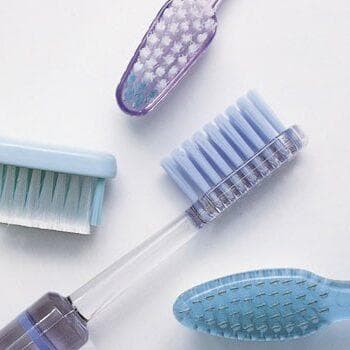
Many people mistakenly believe that brushing harder means brushing better. In fact, prolonged use of hard-bristled toothbrushes or aggressive horizontal scrubbing (a back-and-forth sawing motion) physically wears down gum tissue and tooth enamel, resulting in mechanical gum recession. These patients often present with cervical tooth abrasion, and dental fillings may be required to protect exposed dentine.3. Occlusal Trauma and Tooth Misalignment
Misaligned teeth or excessive bite force can cause certain teeth to bear abnormal pressure, accelerating localised gum recession. Additionally, impacted wisdom teeth that press against adjacent teeth may indirectly deteriorate the surrounding periodontal environment.4. Natural Ageing and Genetics
As we age, gum tissue naturally undergoes mild physiological recession. Some individuals, due to genetic factors, are born with a thinner gingival biotype, making them inherently more susceptible to gum recession.Treatment Options for Gum Recession
Treatment strategy depends on the severity of recession and its underlying cause. There are two main categories: non-surgical and surgical treatment:- Basic Treatment (Inflammation Control): For mild recession caused by periodontal disease, the primary goal is thorough removal of plaque and tartar. The dentist may recommend deep cleaning (root planing and scaling). If the dental pulp is infected, root canal treatment may be necessary.
- Desensitisation Treatment: For tooth sensitivity caused by exposed roots, the dentist will apply desensitising agents or recommend using anti-sensitivity toothpaste to occlude the dentinal tubules.
- Restorative Treatment: If root wear has created a concave defect, composite resin can be used to fill and cover the exposed area.
- Surgical Treatment (Root Coverage Procedure): For severe gum recession — particularly cases affecting aesthetics or causing significant sensitivity — a periodontist may recommend gum grafting surgery, in which soft tissue is harvested from the palate and transplanted to the affected site.
- Restoration of Severe Tooth Loss: If periodontal disease has already resulted in tooth loss, dental implants should be considered to restore chewing function and prevent further bone and tissue loss in adjacent areas.
2026 Hong Kong Gum Recession Treatment Fee Reference
The following fees are for 2026 market reference only. Actual costs vary depending on the clinic's tier, the dentist's qualifications (general practitioner or periodontist specialist), and the complexity of the individual case:| Gum Treatment | 2026 Reference Fee (HKD) | Indications |
|---|---|---|
| General Oral and Periodontal Examination | HK$300 - HK$800 | Initial assessment of recession severity |
| Full-Mouth Scaling (Tartar Removal) | HK$500 - HK$1,200 | Prevention and maintenance for mild gingivitis |
| Deep Root Planing and Scaling (per quadrant) | HK$2,500 - HK$6,000 | Removal of subgingival tartar |
| Cervical Dental Filling for Gum Recession | HK$800 - HK$1,800 / per tooth | Restoring notches caused by toothbrush abrasion |
| Gum Grafting Surgery | HK$8,000 - HK$15,000+ / per area | Severe root exposure and aesthetic reconstruction |
Frequently Asked Questions (Essential Reading for Gum Recession)
Q1: Can gum recession heal naturally?
Unfortunately, once gum tissue has receded, it cannot regenerate naturally back to its original height. Current treatment goals focus primarily on "halting further deterioration" and "improving the existing condition." Prevention is therefore far better than cure — if you notice your teeth appearing longer or early signs of sensitivity, seek dental advice promptly.Q2: Will using an electric toothbrush worsen gum recession?
If using a sonic vibration toothbrush with a pressure-sensing function and applying correct technique (resting it gently against the tooth surface), it generally causes less damage to the gums than manual brushing. However, if an electric toothbrush is used with a forceful sawing motion against the gums, it can indeed aggravate mechanical recession.Q3: Is surgery always necessary for gum recession?
Not necessarily. If the recession is mild and is not causing significant tooth sensitivity or aesthetic concerns, it can usually be managed through scaling to control inflammation combined with improved brushing habits. Gum grafting surgery is typically reserved for moderate-to-severe cases that affect quality of life.How to Choose the Right Dental Service?
Addressing gum recession falls within the field of periodontology. When selecting a dental service, patients are advised to consider not only cost, but also the dentist's professional qualifications and the clinic's equipment. For complex cases requiring gum surgery, clinics or Day Procedure Centres with comprehensive monitoring facilities are worth considering. Patients may also refer to reputable information platforms such as Hong Kong Dental Guide to access objective information on dental fees and service scope. Do not rely on unverified promotional claims found online.※ Actual fees depend on case difficulty.
Found this useful? Pass it on
One tap to send it to family or friends on WhatsApp.
Related Questions
If my child's gums bleed after scaling, does that mean the dentist was too rough?
Mild discomfort or gum bleeding in the days following scaling is normal. This is typically caused by mild gum inflammation triggered by pre-existing p...
Read related articleWhen buying a toothbrush in Hong Kong in 2026, does a more expensive brand necessarily mean better quality?
Not necessarily. As Professor Chu points out, brush head shape and handle design come down to personal preference. As long as the bristles are soft an...
Read related articleWhy should I not brush my teeth immediately after an acid reflux episode?
Stomach acid temporarily softens the tooth enamel. If you brush immediately, the physical friction of the toothbrush will directly abrade the weakened...
Read related articleIf my jaw clicks when I open my mouth, does it always need to be treated?
If there is only a clicking sound without any pain or functional limitation (such as being unable to open the mouth fully), it is generally advisable...
Read related articleAre cold sores contagious?
Yes, from the first tingle until they have fully healed. They spread by kissing and shared items.
Read related article