Wisdom Tooth Removal and Extraction Cost in Hong Kong 2026: Public, Subsidised, Private and Shenzhen Benchmark
Written and reviewed by the HK Dental Guide editorial team · Figures checked 26 Sep 2026 · 14 min read
On this page(15)
Wisdom tooth removal in Hong Kong, 2026: private clinics charge HK$600–1,500 for a simple extraction and from HK$3,500 for surgical wisdom-tooth removal; HKU resident dentists from HK$800 and HK$3,500; private hospitals HK$10,000–25,000; DH emergency dental sessions are free for eligible people (HK$850 otherwise, pain relief or extraction only); one Shenzhen public hospital case cost about ¥460. Verified 2026-09-26.

2026 Hong Kong wisdom tooth and extraction fee benchmark
The table separates a simple extraction, non-surgical wisdom-tooth removal, surgical removal of an impacted tooth (gum incision or sectioning) and specialist / private hospital care. Every figure carries a source number; the list is under "Sources".
| Item | Public (DH / Hospital Authority / university dentistry) | Non-profit / subsidised | Private clinics (typical range) | Shenzhen (published data) |
|---|---|---|---|---|
| Simple extraction (one tooth, non-surgical) | DH emergency dental sessions: free for eligible people, HK$850 for non-eligible people (pain relief or extraction only)1,2; HKU resident dentists, simple extraction from HK$8008; Prince Philip Dental Hospital teaching patients HK$50 per visit, no separate extraction line on the schedule6 | Community Dental Support Programme: Category A free, Category B HK$50 per tooth (up to three filling-or-extraction quotas)3 | HK$600–1,5009,10; private hospitals HK$1,500–12,00011,12 | ¥200–50014,15 |
| Non-surgical wisdom-tooth removal (fully erupted) | Emergency sessions offer pain relief or extraction only1; complex cases are generally referred on;HKU resident dentists, adult tooth extraction from HK$8008 | CDSP counts it as a filling-or-extraction quota: Category A free / Category B HK$50 per tooth; the programme page does not separate wisdom teeth3 | HK$1,500–2,800 (upper cheaper, lower dearer)9,10; private hospitals HK$5,000–12,000 (oral and maxillofacial surgery / non-surgical)11,12 | Public hospital case about ¥460 (HK01 reported ¥461 paid, covering examination, surgery, consultation, treatment and medication)13; private chain ¥500–80013 |
| Surgical wisdom-tooth removal (impacted; incision / sectioning) | DH hospital dental services merged into Hospital Authority oral and maxillofacial surgery on 2026-02-06; mainly for inpatients, special oral-care needs and dental emergencies, referral letter required5; HKU resident dentists, surgical removal of tooth from HK$3,5008; Prince Philip Dental Hospital teaching patients wait weeks to years7 | Programme page does not list surgical wisdom-tooth removal; ask the participating clinic3 | From HK$3,500 (/fees hub); two published price lists show from HK$4,000 and from HK$4,5009,10 | Impacted tooth ¥800–2,000 per tooth, complex impaction from ¥3,000 per tooth14; private chain impacted ¥1,000–1,50013 |
| Oral and maxillofacial surgery specialist / private hospital | Hospital Authority OMFS: Hospital Authority specialist out-patient fees apply, referral required5 | Not applicable | Specialist clinics publish no uniform price; private hospitals specialist consultation HK$1,500–2,500, surgical extraction HK$10,000–25,000 per tooth11,12 | Complex impaction from ¥3,00014 |
| General anaesthesia / monitored anaesthesia care (add-on) | Not itemised on public fee schedules | Not applicable | Neither private hospital dental schedule itemises the anaesthetist or day-surgery room; ask item by item11,12; one clinic list states extraction prices include local anaesthetic and medication9 | No published price found |
| Follow-up / X-ray / CBCT | DH non-eligible radiology: basic HK$4002 | CDSP: X-rays fully subsidised for Category A3 | Panoramic X-ray (OPG) clinics HK$300–4009, hospitals HK$650–1,00011,12; CBCT clinics HK$1,200–1,5009,10, hospitals HK$1,600–2,10011,12 | CT about ¥60 (public hospital case)13 |
What the price includes, and what it does not
The headline figure on a quote is usually the surgical fee alone. Ask about:
- Consultation: private hospital specialist consultation HK$1,500–2,50011,12; clinic examination HK$100–3009,10, sometimes folded into the extraction fee.
- X-rays and CBCT: a panoramic X-ray comes first; if the roots sit near the inferior alveolar nerve a CBCT may be added, HK$1,200–1,500 at clinics and HK$1,600–2,100 at hospitals9–12.
- Anaesthesia: local anaesthetic is normally included (one clinic list says so9); monitored anaesthesia care (MAC) or general anaesthesia needs an anaesthetist and a day-surgery room, which neither private hospital dental schedule itemises, so they are charged separately11,12.
- Medication: painkillers, antibiotics, mouthwash; DH charges non-eligible people HK$90 per prescription item2.
- Follow-up: non-dissolving sutures come out about a week later; ask whether review and dry-socket dressing visits are charged.
- Insurance: medically necessary surgery (impaction causing infection, decay or a cyst) may fall under some inpatient or day-surgery benefits, depending on the policy; get a written quote and check with the insurer.
Why do prices vary so much?
- General dentist or specialist: oral and maxillofacial surgery is one of the eight specialties on the Dental Council register18. Private hospital specialist consultation is HK$1,500–2,500 and surgical extraction HK$10,000–25,00011,12; clinic surgical removal starts at HK$3,5009,10.
- Degree of impaction: a fully erupted tooth comes out directly (non-surgical HK$1,500–2,8009,10); a tilted, horizontal or buried tooth21 needs the gum opened, bone removed and the tooth sectioned23, raising time and risk.
- Clinic or hospital: the same non-surgical removal is HK$1,500–2,800 at a clinic and HK$5,000–12,000 at a private hospital9–12: setting, equipment and staffing.
- Imaging and anaesthesia: CBCT and monitored anaesthesia each add hundreds to thousands of dollars9–12.
- Number of visits: suture removal, dry-socket care and infection reviews may each be charged.
The HKU fee schedule itself notes that its figures are starting fees that rise with complexity and materials8.
How to use public and subsidised services
- DH emergency dental sessions: 11 clinics, pain relief or extraction only, not fillings, scaling or dentures1. The online ballot has run since 2024-12-30 via the eHealth app, iAM Smart or the DH webpage, 6:00–11:30 am1. From 2026-01-01 eligible people pay nothing, non-eligible people HK$8501,2. Complex impacted teeth are referred on.
- Hospital Authority oral and maxillofacial surgery: the seven DH hospital dental clinics moved to the Hospital Authority on 2026-02-06, mainly for inpatients, special oral-care needs and dental emergencies; new cases need a referral letter and pay Hospital Authority consultation fees5.
- Prince Philip Dental Hospital (teaching patients): book online or take a queue ticket at the first-floor counter; HK$50 per visit6, but acceptance depends on teaching needs and the wait runs from weeks to several years7.
- HKU Integrated Dental Care: resident dentists under faculty supervision, simple extraction from HK$800, surgical removal from HK$3,5008.
- Community Dental Support Programme: for Old Age Living Allowance recipients, Hospital Authority fee-waiver holders and users of specified welfare services, registered on eHealth; Category A (for example OALA recipients aged 75 or above, and homeless people) pay nothing for extraction, Category B HK$50 per tooth, up to three filling-or-extraction quotas3. From 2026 it extends to homeless people and adds scaling and root canal treatment4. Contact a participating NGO clinic or a registered social worker3.
- Elderly Health Care Voucher: aged 65 or above, HK$2,000 a year, cap HK$8,00016; dentists are an eligible provider category, listed in the Primary Care Directory from 2025-03-0117.
Eligibility and application steps for every scheme are on the dental subsidies overview.
Five questions to ask before you accept a quote
- Non-surgical or surgical? If the gum is opened or the tooth sectioned, does the price change?
- Does it include consultation, X-ray/CBCT, anaesthetic, medication, suture removal and review?
- General dentist or oral and maxillofacial surgery specialist? Check the Dental Council register18.
- Are the roots close to the inferior alveolar nerve? Is a CBCT needed?
- What does follow-up cost if dry socket or infection develops?
Section 1.4.3 of the Dental Council's Code requires fees and charges to be made known on request before treatment19. For a line-by-line walkthrough see how to read a dental quote; to check registration and specialist status see how to verify a dentist.
Shenzhen vs Hong Kong: what to weigh beyond price
A reported Shenzhen public hospital wisdom-tooth removal cost ¥461 (about HK$523) all-in13; a private dental hospital lists impacted teeth at ¥800–2,000 and complex impaction from ¥3,00014. The gap is large, but factor in:
- The Consumer Council (issue 572, June 2024) notes the mainland has no independent statutory body regulating dentists or clinics; disputes go to the health authorities with your own medical records20.
- Dry socket and infection are the usual complications; if either develops you return to Shenzhen or pay for a Hong Kong visit27.
- For a lower tooth near the nerve, ask whether a CBCT was taken and who follows up any numbness.
See the northbound dental care checklist before you go.
Why wisdom teeth get stuck: four common types of impaction
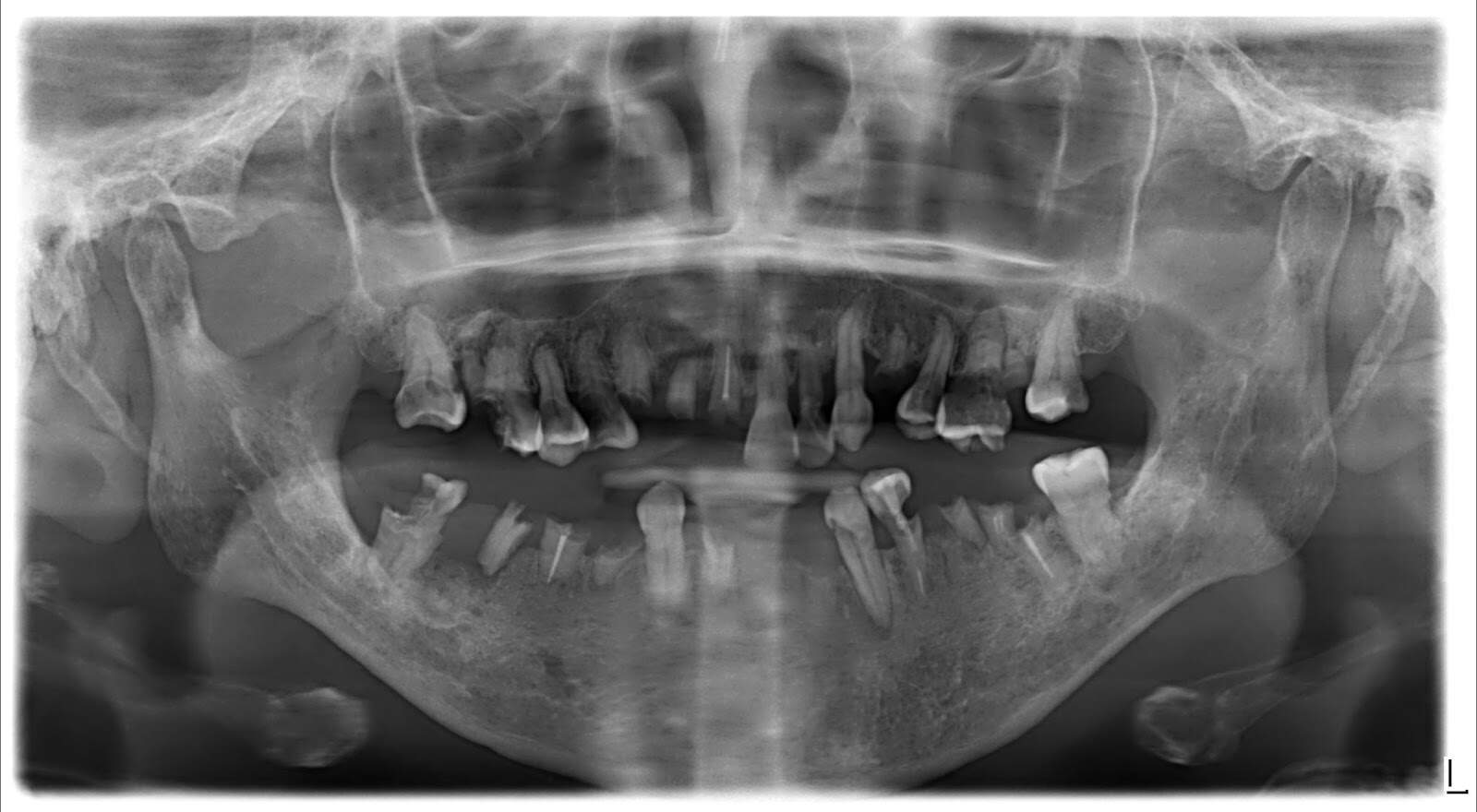
Wisdom teeth (third molars) usually erupt between 17 and 2521,25. Modern jaws are shorter, so they often lack space and come through tilted, sideways or stay buried in the jawbone21: "impacted". Four clinical types:
- Mesial impaction: the most common; tilted forward against the second molar, trapping food and inviting decay.
- Vertical impaction: upright but stuck in gum or bone.
- Horizontal impaction: lying on its side; the hardest to remove, usually needs sectioning.
- Distal impaction: angled backwards towards the throat.
Does every wisdom tooth need to come out?
No. The Department of Health says a tooth can be monitored with regular check-ups if you keep ideal oral hygiene, if it is fully buried and unerupted, or if it causes no discomfort23. Removal is indicated when the covering gum is repeatedly inflamed, the tooth is badly decayed, there is periodontal disease or cystic swelling, or it must go before orthodontics23. The American Association of Oral and Maxillofacial Surgeons (AAOMS) lists pain, infection, gum disease, cavities, cysts or other pathology and damage to neighbouring teeth as reasons for removal25.
Simple extraction vs surgery: difficulty, recovery and anaesthesia
| Comparison | Simple (non-surgical) extraction | Surgical removal of an impacted wisdom tooth |
|---|---|---|
| Indications | Fully erupted, not impacted, no curved roots | Tilted, horizontal, buried in bone or very close to the nerve21 |
| Steps | Local anaesthetic, then loosen and remove | Open the gum, remove the bone covering the tooth, section the tooth if needed, clean the socket, suture and secure haemostasis23 |
| Recovery | NHS: usually back to normal activities the next day24 | Pain and swelling should start to improve after 1 or 2 days24; after about a week the site begins to regenerate new tissue28 |
| Usual anaesthesia | Local anaesthetic | Local anaesthetic, with sedation or general anaesthetic as options24 (see the monitored anaesthesia care guide) |
| Fee | Clinics HK$600–1,500; non-surgical wisdom tooth HK$1,500–2,8009,10 | Clinics from HK$3,500; private hospitals HK$10,000–25,0009–12 |
Upper wisdom teeth are generally easier and cheaper; a lower impacted tooth needing the gum opened, bone trimmed or the tooth sectioned is minor surgery23, and one clinic list prices upper and lower separately10. For buried teeth a CBCT measures the distance to the mandibular nerve canal. For when a specialist is warranted, see wisdom tooth removal: general dentist or specialist.

The hidden risks of an inflamed wisdom tooth: why not to wait
Food debris and bacteria collect between the crown and the gum covering it and the tissue becomes inflamed: pericoronitis, with cheek swelling, difficulty opening the mouth, pain on swallowing, swollen glands under the jaw, fever and bad breath22. An acute infection may need controlling first, with removal once the swelling settles. Other risks:
- Losing two teeth instead of one: the gap between an impacted wisdom tooth and its neighbour is hard to clean and plaque decays both22; at worst the healthy second molar decays through, its nerve dies and both teeth have to go.
- Root resorption of the neighbour: inflammation and pressure from the impacted tooth can resorb the adjacent root22.
- Cysts: a buried tooth can develop a cyst22 that damages the jawbone and adjacent teeth as it grows25, needing surgical removal.
- Cellulitis: infection spreading into the deep tissues of the face and neck brings high fever, rapid swelling and difficulty swallowing, and can affect breathing; uncommon, but an immediate A&E case.
- Nerve-injury risk rises with age: AAOMS notes wisdom teeth are usually easier to remove when the patient is younger, with roots not fully formed and softer bone; later removal is often more complicated as roots develop, sit closer to nerves and the jawbone densifies25, so it advises evaluation in the early teenage years25.
Not every toothache needs antibiotics, but with fever, swollen glands or spreading infection the dentist prescribes antibiotics and painkillers first and extracts afterwards. Painkillers alone treat the symptom, not the cause.
The procedure and aftercare: how to avoid dry socket
Five steps of surgical wisdom-tooth removal
- Pre-operative assessment: a panoramic X-ray first; a CBCT if the roots sit close to the nerve.
- Anaesthesia: local anaesthetic23; anxious patients can have sedation or a general anaesthetic24.
- Open the gum and remove bone: the dentist cuts the gum and removes the bone enclosing the tooth23.
- Section and remove: the tooth may be divided before removal23, in one piece or two or three pieces24.
- Clean, suture, stop bleeding: sutures may dissolve or come out after about a week23,24. Bite on clean gauze26; if bleeding restarts, press with clean cloth or cotton wool for at least 10 minutes24.
Aftercare checklist
- Cold, then warm: ice the face on the day of surgery and switch to a warm towel the next day23; AAOMS suggests intermittent ice for the first 48 to 72 hours28.
- No straws, no sucking: aggressive sucking can loosen the clot and cause dry socket26; drink from a cup.
- Food: soft or liquid food for the first few days24,26; avoid hard or crunchy food, anything that lodges in the wound (nuts, seeds), alcohol and very hot drinks24. Wait for the anaesthetic to wear off before eating.
- Cleaning: do not touch the wound or rinse on the day23; afterwards rinse gently with warm salt water or mouthwash24,26 and brush the other teeth carefully, avoiding the site24. Toothpaste does not relieve pain and may irritate the wound.
- No smoking: smoking raises the infection risk24; stop completely for at least a few days26.
- Pain relief: the NHS suggests paracetamol or ibuprofen24; follow your dentist's prescription.
- New toothbrush: a new brush with a smaller head and softer bristles reaches the back of the mouth and avoids debris on worn bristles; still keep off the wound.
What is dry socket? AAOMS puts it at roughly 4 percent of extractions: the clot dislodges early, dissolves or fails to form27, and older age is one associated factor27. The sign is worsening pain that painkillers do not touch, sometimes with a bad taste; go back promptly for cleaning and a dressing. On nerve injury, AAOMS says numbness beyond a short period is uncommon and usually temporary, though in rare cases it persists long term27; the NHS says it usually improves but can last weeks or months24. A day-by-day plan is in the wisdom tooth aftercare guide.
When to see a dentist immediately
- Bleeding that does not stop after 10 minutes of pressure24.
- Pain and swelling that are severe or getting worse and painkillers are not helping24.
- Pain with a bad taste, a high temperature or feeling unwell24: possible dry socket or infection.
- Rapid facial or neck swelling, difficulty swallowing or inability to open the mouth22.
- Difficulty breathing, a feeling of airway pressure, or high fever with confusion: beyond clinic care, go to A&E now.
For tonight-or-tomorrow triage see the toothache emergency guide.
Frequently asked questions
How much does wisdom tooth removal cost in Hong Kong in 2026?
Clinics: non-surgical HK$1,500–2,800, surgical from HK$3,500; HKU resident dentists from HK$3,500; private hospitals HK$10,000–25,0008–12.
What is the difference between an extraction price and a wisdom tooth price?
A simple non-wisdom extraction is HK$600–1,500 at clinics9,10; wisdom teeth sit deep and are often impacted, so non-surgical removal starts at HK$1,500 and surgery at HK$3,5009,10.
Is there a cheaper public option for wisdom tooth removal?
DH emergency sessions are free for eligible people (HK$850 otherwise) but only for pain relief or extraction1,2; CDSP Category A free, Category B HK$50 per tooth3; HKU resident dentists from HK$800 / HK$3,5008.
Why does a specialist charge so much more for wisdom tooth removal?
Oral and maxillofacial surgery is one of eight registered specialties18; private hospital specialist consultation is HK$1,500–2,500 and surgical extraction HK$10,000–25,00011,12, covering theatre, imaging and specialist staff.
Does the wisdom tooth fee include X-rays, anaesthesia and follow-up?
Local anaesthetic is usually included9; OPG (HK$300–400) and CBCT (HK$1,200–1,500) are mostly extra at clinics9,10; ask about monitored anaesthesia and suture-removal visits item by item11,12.
How is a wisdom tooth removed and how long does recovery take?
Under local anaesthetic the gum is opened, bone removed, the tooth sectioned and the site sutured23; pain and swelling improve after 1 or 2 days, normal activities usually resume the next day24, and new tissue forms after about a week28.
Related guides
- Wisdom tooth removal: general dentist or oral surgeon? — which impactions warrant referral.
- Wisdom tooth aftercare guide — a day-by-day care plan and dry-socket warning signs.
- Does wisdom tooth removal slim your face? — a common myth examined.
- Toothache emergency guide — tonight or tomorrow, emergency sessions or A&E.
- 2026 Hong Kong dental fee hub and dental subsidies overview — public, private and Shenzhen benchmarks for every treatment.
Sources
- Department of Health: General Public Sessions (11 clinics, online registration, free for eligible people / HK$850 non-eligible) dh.gov.hk, verified 2026-09-26
- Department of Health: Dental service fees (emergency dental treatment HK$850, prescription HK$90, radiology from HK$400, effective 2026-02-06) dh.gov.hk, verified 2026-09-26
- Community Dental Support Programme: introduction and co-payments (Category A free, Category B HK$50 per tooth) communitydental.gov.hk, verified 2026-09-26
- Government press release 2025-12-17: CDSP expanded scope and beneficiaries from 2026 info.gov.hk, verified 2026-09-26
- Government press release 2025-12-15: DH hospital dental services integrated into the Hospital Authority (from 2026-02-06, seven clinics, referral letter required) info.gov.hk, verified 2026-09-26
- Prince Philip Dental Hospital: schedule of fees for teaching patients (HK$50 per visit, effective 2026-03-01) ppdh.org.hk, verified 2026-09-26
- Prince Philip Dental Hospital: registration information for teaching patients (waiting time from weeks to several years) ppdh.org.hk, verified 2026-09-26
- HKU Faculty of Dentistry Integrated Dental Care: fee schedule, resident dentists (simple extraction HK$800, surgical removal of tooth HK$3,500, starting fees, 2025-09-03 edition) iad.facdent.hku.hk, verified 2026-09-26
- Private clinic market reference: Bowtie (insurer): must wisdom teeth come out? 2026 prices (Chinese) (updated 24 Jul 2026; 2026 HK private clinic prices: simple extraction $1,500–2,800, surgical $4,000–8,500+, 3D CBCT $800–1,800); this site also checked two private clinics' published price lists in Sep 2026 (not named or linked, to stay neutral). checked 5 Oct 2026.
- Private clinic market reference: Bowtie (insurer): 2026 Hong Kong dentist fee comparison (Chinese) (updated 24 Jul 2026; simple extraction $600–1,500 per tooth); this site also checked two private clinics' published price lists in Sep 2026 (not named or linked, to stay neutral). checked 5 Oct 2026.
- Union Hospital: dental charges (simple extraction HK$1,500–3,000 / OMFS HK$5,000–10,000, surgical extraction HK$10,000–25,000, OPG HK$650, CBCT HK$1,600–2,100, effective 2026-05-01) union.org, verified 2026-09-26
- Hong Kong Sanatorium & Hospital: Dental Centre charges (non-surgical extraction HK$5,000–12,000, surgical extraction HK$10,000–25,000, specialist consultation HK$1,500–2,500, OPG HK$1,000, CBCT HK$1,800, effective 2026-08-01) hksh.com, verified 2026-09-26
- HK01, 2023-04-28: Hong Kong woman's Shenzhen public hospital wisdom-tooth removal, ¥461 paid (Luohu District People's Hospital branch) and a private chain's price list hk01.com, verified 2026-09-26
- Shenzhen extraction market reference: Bowtie (insurer): Hong Kong vs Shenzhen dental fees 2026 (Chinese) (updated 24 Jul 2026; Shenzhen simple extraction ¥200–500 per tooth, surgical wisdom tooth ¥1,000–3,000+); the anterior/posterior/impacted split comes from a Shenzhen private dental provider's published prices checked in Sep 2026 (not named or linked), market reference only. checked 5 Oct 2026.
- HK01, 2024-04-05: cross-border dental care, Shenzhen extraction ¥200–500 hk01.com, verified 2026-09-26
- Elderly Health Care Voucher Scheme: background (aged 65 or above, HK$2,000 a year, HK$8,000 cap) hcv.gov.hk, verified 2026-09-26
- Elderly Health Care Voucher Scheme: healthcare service provider categories (including dentists) hcv.gov.hk, verified 2026-09-26
- Dental Council of Hong Kong: lists of registered dentists and specialists (eight specialties) dchk.org.hk, verified 2026-09-26
- Dental Council of Hong Kong: Code of Professional Discipline, sections 1.4.2–1.4.4 (fees to be made known on request) dchk.org.hk, verified 2026-09-26
- Consumer Council, CHOICE issue 572 (2024-06): dental service complaint cases and mainland oversight advice consumer.org.hk, verified 2026-09-26
- Department of Health Oral Health Education Unit: impacted wisdom teeth, causes (erupt at 17–25, shorter jaws) toothclub.gov.hk, verified 2026-09-26
- Department of Health Oral Health Education Unit: impacted wisdom teeth, consequences (pericoronitis, decay, root resorption, cysts) toothclub.gov.hk, verified 2026-09-26
- Department of Health Oral Health Education Unit: impacted wisdom teeth, management (indications, surgical steps, aftercare) toothclub.gov.hk, verified 2026-09-26
- NHS: Wisdom tooth removal (anaesthesia, recovery, aftercare, when to get help) nhs.uk, verified 2026-09-26
- AAOMS: Can Impacted Wisdom Teeth Lead to Significant Problems? (age and difficulty, cysts, early evaluation) myoms.org, verified 2026-09-26
- AAOMS: Wisdom Tooth Extraction — Postoperative Instructions (gauze, straws, smoking, soft diet) myoms.org, verified 2026-09-26
- AAOMS: Potential Complications of Wisdom Teeth Extractions (dry socket about 4 percent, nerve numbness) myoms.org, verified 2026-09-26
- AAOMS: Healing After Wisdom Tooth Extractions (ice for 48–72 hours, new tissue after about a week) myoms.org, verified 2026-09-26
※ Actual fees depend on case difficulty.
Found this useful? Pass it on
One tap to send it to family or friends on WhatsApp.
Related Questions
Do I need to have my wisdom tooth extracted even if I have no pain?
Even in the absence of pain, if a wisdom tooth has erupted in a poor position that makes cleaning more difficult, the risk of tooth decay increases. T...
Read related articleAre there risks associated with Monitored Anesthesia Care?
All forms of sedation involving medications carry inherent risks. Potential risks include respiratory depression, a drop in blood pressure, and allerg...
Read related articleWhat should I do if the pain after wisdom tooth extraction is so severe that I cannot sleep?
This is a common post-operative reaction. Take your prescribed painkillers on schedule as directed by your dentist. If severe pain persists after taki...
Read related article