Cold Sores: Causes, the 4 Stages, Treatment and How to Avoid Spreading Them
Written and reviewed by the HK Dental Guide editorial team · Updated 25 Sept 2026 · 4 min read
On this page(10)
Cold sores are caused by herpes simplex virus type 1 (HSV-1) and usually appear on the edge of the lips or nostrils. Once you have the virus it stays in the body, and it can flare up again when you're run down, after sun exposure or during your period. Cold sores are highly contagious from the first tingle until they have completely healed. Most clear up on their own in about 10 days. Here are the stages, how to treat and prevent them, and when to see a doctor.
What causes cold sores?
Hong Kong's Department of Health explains that cold sores are caused by herpes simplex virus type 1, which becomes dormant in the body and reactivates when immunity drops. The NHS adds that once you have the virus, it stays in your skin for the rest of your life.
The virus is extremely common: the World Health Organization estimates that 3.8 billion people under 50 (64%) worldwide have HSV-1, and many never have symptoms.
The four stages of a cold sore
| Stage | What happens | What to do |
|---|---|---|
| 1. Tingling | Itching, burning or tingling in one spot | Recommended time to start an antiviral cream |
| 2. Blisters | One or more painful blisters appear within 48 hours | Don't squeeze or pop them |
| 3. Bursting | Blisters burst and form a sore | Keep it clean and dry; wash hands after touching |
| 4. Scabbing | A scab forms and falls off | Don't pick the scab |
The NHS says cold sores usually clear up within 10 days; the Department of Health says within two weeks. A first infection, usually in childhood, may also bring fever, painful gums, a sore throat and swollen glands (Mayo Clinic).
What sets off a cold sore?
- a cold or other illness;
- stress and tiredness;
- your period;
- strong sunshine or wind;
- injured or cracked lips;
- lowered immunity.
Sources: Department of Health, NHS, Mayo Clinic.
Treatment
Use antiviral cream early
The NHS advises: use antiviral creams as soon as you recognise the early tingling; they do not always work after blisters appear. Pharmacies sell antiviral creams and cold sore patches; ask a pharmacist.
For frequent or severe outbreaks, a doctor can prescribe antiviral tablets (such as aciclovir, valaciclovir or famciclovir). The Mayo Clinic notes that tablets generally work better than creams. Antivirals shorten an outbreak but cannot clear the virus.
Everyday care
- don't touch the sore; if you do, wash your hands straight away, and don't touch your eyes;
- dab cream on rather than rubbing it in;
- use a sunblock lip balm of SPF 15 or above;
- take paracetamol or ibuprofen for pain, following the pack instructions;
- avoid irritating food and keep the area clean and dry.
Don't use a steroid cream you have at home; ask a pharmacist or doctor before using any cream.
How to avoid passing it on
- don't kiss anyone during an outbreak;
- don't share towels, cups, cutlery or lip balm;
- wash your hands after touching the sore;
- never kiss a newborn baby. The NHS warns that kissing a baby while you have a cold sore can cause neonatal herpes, which is very dangerous to newborns.
The WHO also notes that the virus can spread from skin that looks normal, so take particular care when you have symptoms.
When to see a doctor
The NHS and Mayo Clinic advise seeking help if:
- it hasn't started to heal within 10 days;
- the sore is very large or painful, or you're not sure it's a cold sore;
- you have swollen, painful gums and sores inside the mouth (possible gingivostomatitis);
- you have a weakened immune system (for example during chemotherapy, or with diabetes);
- symptoms are near the eye, or you have eye pain or sensitivity to light (the virus can affect vision);
- you are pregnant, or a newborn has symptoms;
- outbreaks happen many times a year.
Cold sore, mouth ulcer or cheilitis?
| Cold sore | Mouth ulcer | Cheilitis | |
|---|---|---|---|
| Where | Edge of lips, nostrils | Inside the mouth | Across the lips |
| Looks like | A cluster of blisters, then a scab | Round sore, yellow-white centre, red edge | Dry, cracked, peeling |
| Contagious? | Yes | No | No |
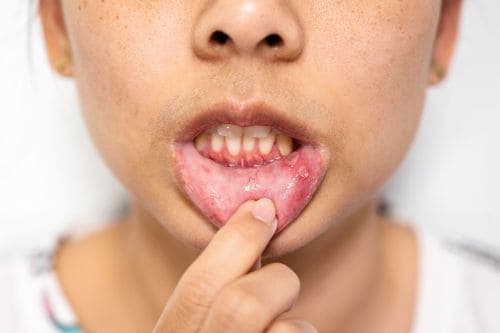
The NHS notes that blisters on the inside of the lip or mouth are more likely to be mouth ulcers than cold sores. See mouth ulcers: causes, relief and when to see a doctor.
Can I see a dentist with a cold sore?
Consider moving non-urgent appointments such as a check-up or scaling, because keeping your mouth open wide for a long time can split the sore and may spread the virus. If it's urgent, mention the cold sore when you book so the dentist can plan.
Frequently asked questions
Are cold sores contagious?
Yes, from the first tingle until they have fully healed. They spread by kissing and shared items.
Can cold sores be cured?
No. The virus stays dormant in the body; antivirals shorten outbreaks and ease discomfort.
How long do cold sores last?
Usually about 10 days; the Department of Health says within two weeks. See a doctor if it hasn't started to heal within 10 days.
Are cold sores caused by "heatiness"?
No. They're a viral infection, which is why antivirals and avoiding spread matter.
Sources
- Department of Health oral health education: cold sores
- NHS: Cold sores (reviewed 2024-02-19)
- NHS: Neonatal herpes (reviewed 2025-07-24)
- World Health Organization: Herpes simplex virus (2025-05-30)
- Mayo Clinic: Cold sore symptoms and causes
- Mayo Clinic: Cold sore diagnosis and treatment
This article is general health information and does not replace diagnosis or treatment advice from a doctor or pharmacist.
Found this useful? Pass it on
One tap to send it to family or friends on WhatsApp.
Related Questions
If my child's gums bleed after scaling, does that mean the dentist was too rough?
Mild discomfort or gum bleeding in the days following scaling is normal. This is typically caused by mild gum inflammation triggered by pre-existing p...
Read related articleWhen buying a toothbrush in Hong Kong in 2026, does a more expensive brand necessarily mean better quality?
Not necessarily. As Professor Chu points out, brush head shape and handle design come down to personal preference. As long as the bristles are soft an...
Read related articleWhy should I not brush my teeth immediately after an acid reflux episode?
Stomach acid temporarily softens the tooth enamel. If you brush immediately, the physical friction of the toothbrush will directly abrade the weakened...
Read related articleIf my jaw clicks when I open my mouth, does it always need to be treated?
If there is only a clicking sound without any pain or functional limitation (such as being unable to open the mouth fully), it is generally advisable...
Read related articleDoes more toothpaste clean better?
No. Hong Kong's Department of Health advises adults to brush every morning and night with a pea-sized amount of fluoride toothpaste (Department of Hea...
Read related article