2026 Hong Kong Aesthetic Braces Comparison: Pros and Cons of Clear Aligners, Ceramic Brackets, and Lingual Orthodontics
Written and reviewed by the HK Dental Guide editorial team · Figures checked 26 Sep 2026 · 6 min read
On this page(6)
Aesthetic braces have become increasingly popular, especially among adults. In Hong Kong in 2026, improving tooth alignment while maintaining a pleasing appearance has become mainstream. The three main types of aesthetic braces are ceramic bracket braces, lingual bracket braces (inner braces), and clear aligners (such as Invisalign). Each has its own characteristics, differing in price, comfort, and suitability. Understanding their pros and cons is the first step in beginning your orthodontic journey.
1. Ceramic Braces: The Balance Between Tradition and Aesthetics
Although ceramic brackets are bonded to the tooth surface in the same way as metal brackets, their semi-transparent or tooth-coloured material makes them far more aesthetically pleasing than traditional metal braces.
-
Advantages: High strength, resistant to deformation under pressure; pairing them with tooth-coloured archwires further enhances their appearance. The British Orthodontic Society notes that ceramic brackets can be as effective as conventional metal brackets at moving teeth (BOS: Conventional Fixed Braces).
-
Disadvantages:
-
Wear concerns: the BOS notes that the hard ceramic can damage the opposing teeth when the bite is deep, so ceramic brackets are sometimes not recommended for the lower teeth (BOS).
-
Difficult removal: the BOS notes that ceramic brackets are slightly more difficult to remove than conventional metal brackets at the end of treatment (BOS).
-
Outdated designs: Older plastic brackets are now rarely used due to their tendency to deform and discolour.
-
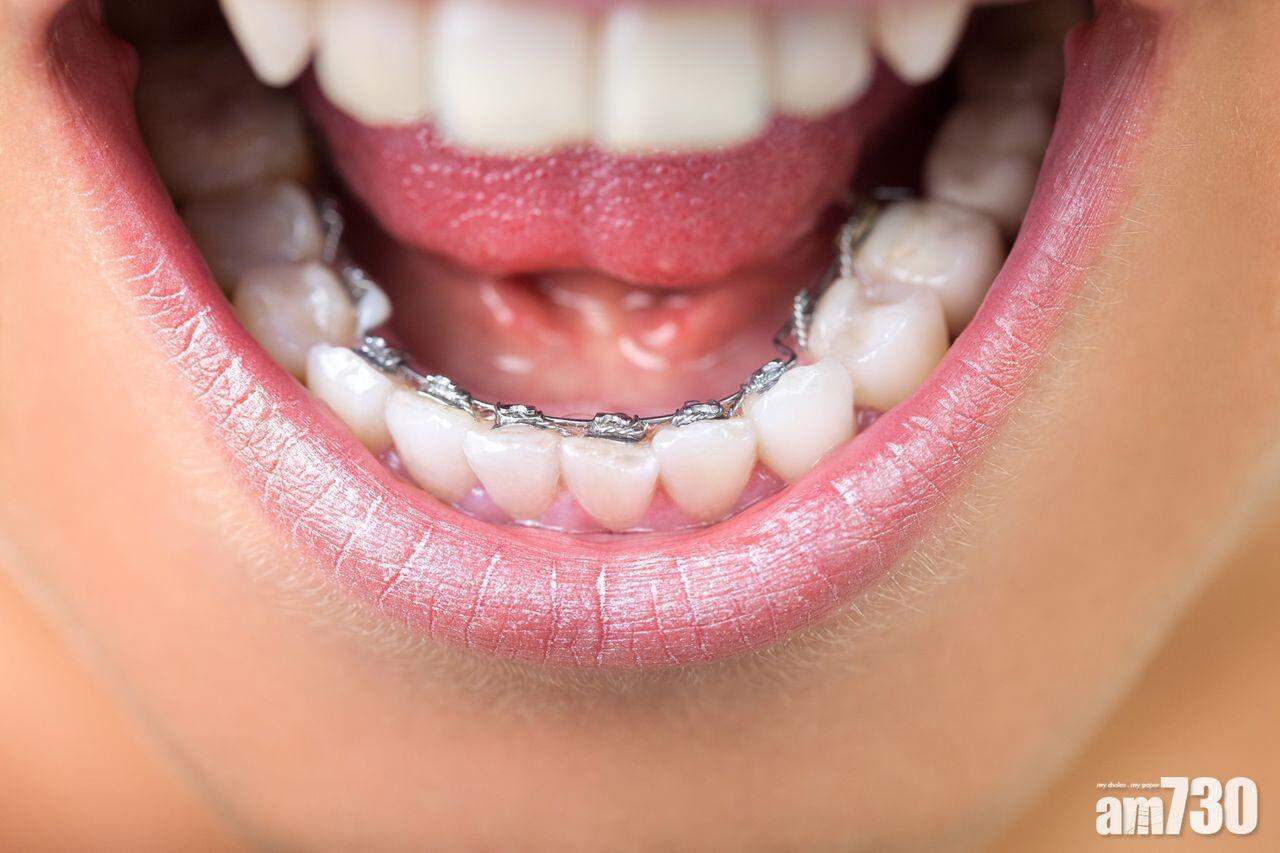
2. Lingual Braces: Truly Invisible Technology
Lingual braces are bonded to the inner surface of the teeth, making them completely invisible from the outside — the true "inner brace."
-
Advantages: Ultimate discretion, ideal for professionals with strict aesthetic requirements.
-
Disadvantages:
-
High technical demands: Working on the inner surface of teeth is extremely challenging, requiring a highly skilled dentist, and is consequently the most expensive option.
-
Cleaning challenges: the BOS notes initial difficulty speaking, tongue soreness, problems keeping the appliance clean and a considerably higher cost (BOS); anyone with gum problems should have them assessed by a dentist first.
-
Comfort: During the initial period, they may noticeably affect speech and cause tongue irritation.
-
3. Clear Aligners: The Comfortable and Convenient New Favourite
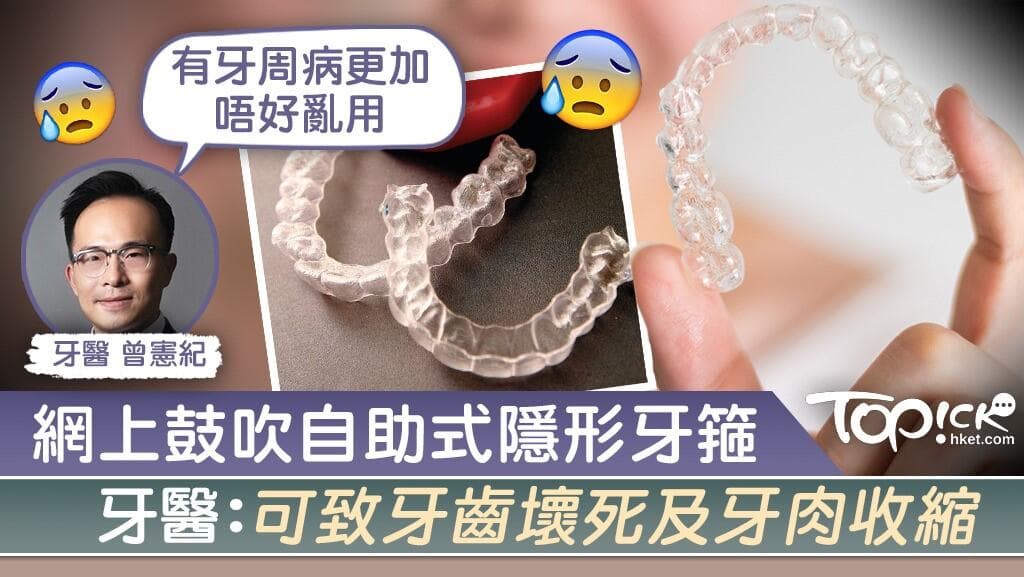
Clear aligners (such as Invisalign) use computer simulation to map out tooth movements, producing a series of removable aligners. Each aligner moves the teeth only a small amount; the American Association of Orthodontists says aligners must be worn at least 22 hours a day and are usually changed weekly (AAO: Clear Aligners).
-
Advantages:
-
Aesthetic and low discomfort: Virtually invisible, and the small incremental movements result in less discomfort.
-
No impact on eating: Removable during meals, with no interference with chewing and no food trapping issues.
-
-
Disadvantages:
-
Cost and limitations: Generally more expensive than traditional external braces, and currently better suited for mild to moderate dental misalignment; complex cases may still require bracket-based orthodontics.
-
Attachments: Tooth-coloured resin "attachments" are sometimes bonded to the tooth surface to assist with tooth movement.
-
2026 Comprehensive Comparison of Three Major Aesthetic Braces Options
| Comparison Category | Ceramic Braces (External) | Lingual Braces (Internal) | Clear Aligners (e.g. Invisalign) |
| Aesthetics | High (semi-transparent) | Excellent (completely invisible) | High (transparent) |
| Discomfort | Moderate | Moderate to high (tongue irritation) | Mild |
| Ease of Cleaning | Difficult | Very difficult | Easy (removable) |
| 2026 Reference Price | HK$25,000 – HK$45,000 | HK$60,000 – HK$100,000+ | HK$20,000 – HK$55,000 |
| Suitable Cases | All severity levels | Complex to moderate | Mild to moderate |
Price note: the "2026 reference prices" above are typical quoted ranges, not figures from a published price list. The sourced range for private conventional (metal) braces in Hong Kong is HK$31,000–60,000, and about HK$100,000–130,000 at private hospitals (checked 2026-09-26, see our fee overview); public dental services generally do not offer orthodontics. The premium for ceramic, lingual or clear aligners depends on the clinic and case complexity, so ask for an itemised quote before comparing (how to read a dental quote).
Section 3: Frequently Asked Questions (FAQ)
-
Q1: Will ceramic braces cause teeth to turn yellow?
-
A: The ceramic brackets themselves will not discolour, but the elastic ties around the brackets may stain from consuming foods such as curry or coffee. It is advisable to attend regular check-up appointments to have the elastic ties replaced in order to maintain a clean appearance.
-
-
Q2: Is it really necessary to wear clear aligners for 22 hours a day?
-
A: Yes. Clear aligners are removable and rely heavily on patient compliance. If worn for insufficient time, the teeth will not move as planned by the computer simulation, which may delay or compromise the entire treatment outcome.
-
-
Q3: In Hong Kong in 2026, which type of aesthetic braces can be paid for using medical vouchers?
-
A: Elderly Health Care Vouchers are only for people aged 65 or above — HK$2,000 a year with an accumulation cap of HK$8,000 (Health Care Voucher Scheme: eligibility and amount). They can be used for dental services from dentists enrolled in the scheme, but not simply to buy goods (voucher FAQ). Against the cost of braces the amount is small and would normally cover only part of a consultation or check-up; people under 65 have no voucher, and public dental services generally do not offer orthodontics (see our fee overview). Ask the clinic directly when booking whether it accepts vouchers.
-
FAQ: braces in Hong Kong — clear, ceramic or metal?
How much do braces cost in Hong Kong?
The sourced range for private conventional braces is HK$31,000–60,000, rising to about HK$100,000–130,000 at private hospitals; public dental services generally do not offer orthodontics (fee overview, checked 2026-09-26). Ceramic, lingual and clear-aligner options are usually quoted above the metal-braces figure, but there is no published price list for the difference, so request an itemised quote. Aligner fee structures (treatment fee, attachments, retainers) are explained in our clear-aligner cost guide, and the overall adult process in our adult orthodontics guide.
How much are ceramic braces compared with clear aligners?
Both are premium options over metal braces and their prices overlap; the deciding factor is usually the case, not the price. The American Association of Orthodontists notes that no appliance is inherently better than another and that most problems can be treated with braces, while aligner suitability is case-dependent (AAO: Braces vs. Clear Aligners). Aligners must also be worn at least 22 hours a day (AAO: Clear Aligners).
Are clear aligners suitable for everyone?
No. The AAO states that clear aligners are not right for everyone and that some cases are treated more predictably with braces; your orthodontist may recommend aligners, braces or a combination (AAO). Mail-order or DIY aligners without a dentist's assessment and follow-up carry real risks — see our DIY aligner warning.
Do I need a specialist orthodontist, or can a general dentist fit braces?
Orthodontics is one of the eight specialties on the Dental Council of Hong Kong's Specialist Register, which you can check online (DCHK: lists of registered dentists and specialists). General dentists may also provide orthodontic treatment, but only dentists on the register may use the specialist title. How to check the register and what to ask before you commit is covered in how to choose an orthodontist and how to verify a dentist.
Where can I get braces in Mong Kok or elsewhere in Kowloon?
This site does not recommend or rank clinics. To find dental services by area, use our district pages (public, subsidised and university institutions) or search the Dental Council register by practice address (DCHK). Wherever you go, have an initial assessment and get a written quote before deciding.
Sources
- American Association of Orthodontists — Clear Aligners: at least 22 hours a day; not right for everyone.
- AAO — Braces vs. Clear Aligners: bracket types (metal, ceramic); no appliance is inherently better.
- Dental Council of Hong Kong — lists of registered dentists and specialists.
- Elderly Health Care Voucher Scheme: eligible age, annual amount and accumulation cap.
- HK Dental Guide — Fee overview: private braces range and sources (checked 2026-09-26).
Additional source: British Orthodontic Society — Conventional Fixed Braces (pros and cons of ceramic and lingual braces).
Further reading on this site: Interproximal reduction (IPR): process and risks · Braces or jaw surgery? Dental vs skeletal bite problems
※ Actual fees depend on case difficulty.
Found this useful? Pass it on
One tap to send it to family or friends on WhatsApp.
Related Questions
For braces treatment in Hong Kong in 2026, is IPR typically included in the treatment package?
The vast majority of clear aligner (e.g. Invisalign) or fixed appliance packages already include the cost of necessary IPR. However, it is advisable t...
Read related articleWhat should we do if my child is in so much pain during orthodontic treatment that they don't want to eat?
It is normal to experience mild soreness shortly after braces are fitted or adjusted. Parents should prepare soft, nutritious foods (such as fish or t...
Read related articleCan adult braces cause teeth to become loose?
Under normal mechanical guidance, slight tooth mobility is a normal part of the bone remodelling process. It is only when poor oral hygiene leads to p...
Read related articleCan I just have braces and skip the surgery?
It depends on the size of the discrepancy. Mild-to-moderate skeletal problems can sometimes be "camouflaged" orthodontically — moving teeth to compens...
Read related articleHow do I check whether a dentist is a specialist in orthodontics?
Open the Orthodontics list in the Dental Council of Hong Kong's Specialist Register. As at 31 August 2026 it named 75 specialists, with practice addre...
Read related article