Children's Braces: What Age to Start, and When Crossbites, Buck Teeth or Crowding Need Checking
Written and reviewed by the HK Dental Guide editorial team · Updated 25 Sept 2026 · 4 min read
Early Orthodontic Treatment for Children (Part 1)
This video is an excerpt cited from Home Dental's public YouTube educational videos; reviewed by the HK Dental Guide editorial team.
Early Orthodontic Treatment for Children (Part 2)
This video is an excerpt cited from Home Dental's public YouTube educational videos; reviewed by the HK Dental Guide editorial team.
On this page(4)
Misaligned teeth (medically known as "malocclusion") not only affect a child's appearance and confidence, but can also have long-term consequences for oral health. In recent years, more and more Hong Kong parents have been considering braces for children to address their child's dental alignment issues. When exactly can children start wearing braces? Will the problems improve naturally after the adult teeth come in? Drawing on public guidance from the Department of Health and the American Association of Orthodontists (AAO), this article answers some of the most common questions from parents.
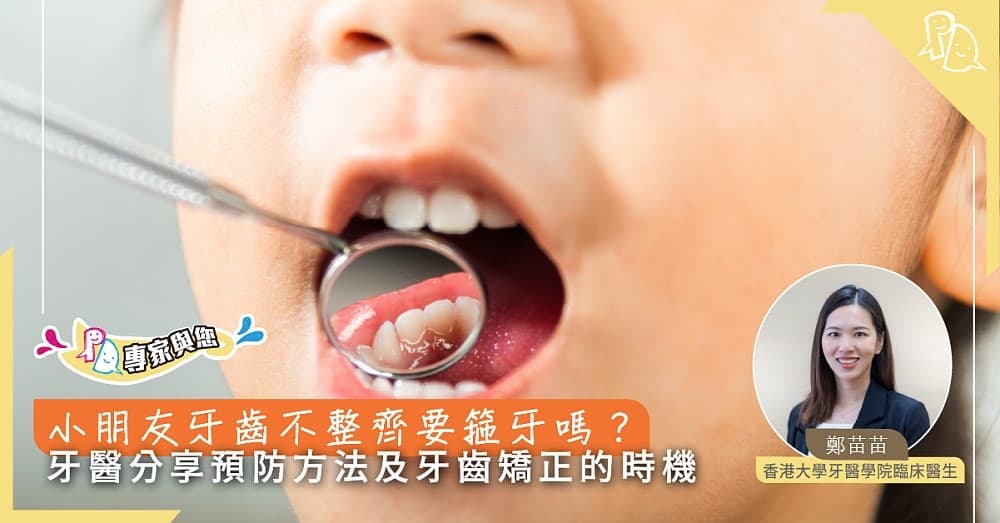
-
1. Causes of Protruding and Underbite Teeth: Genetic or Environmental?
Misalignment issues such as protruding teeth or underbites can appear as early as the primary-teeth stage. According to the Department of Health's oral health education materials, malocclusion can stem from hereditary factors (such as a mismatch between upper and lower jaw size, or between tooth size and jaw size) or from acquired factors (such as early loss of baby teeth, or habits like digit sucking and pen biting). The causes generally fall into two categories:
-
Genetic factors: Related to family heredity and the shape and size of the jaw. If a parent has an abnormal jaw structure, the child has a higher likelihood of developing dental alignment problems.
-
Environmental factors: Including chewing habits, nutritional intake, breathing habits (such as mouth breathing), lip and tongue habits, and dental trauma.
2. 2026 Hong Kong Children's Braces Fees
Fees depend on how complex the case is and which appliance is used. These are the ranges with published sources in Hong Kong dental fees at a glance (sources and dates for every cell are there):
Item Private (typical range) Notes Metal braces $31,000–60,000; private hospitals $100,000–130,000 Not generally offered in the public sector Clear aligners (dentist-led) $16,800–50,000 (Consumer Council 2023 study) Ask each clinic about children's options Early treatment (e.g. functional appliances) No verifiable published fees; ask directly Usually assessed while baby teeth are being replaced The Department of Health's School Dental Care Service does not cover braces. Ask whether a quote includes examination, X-rays, reviews and retainers; see how to choose an orthodontist.
3. The Golden Window for Braces: Will Teeth Improve Naturally After the Adult Teeth Come In?
Many parents wonder: "Will protruding teeth or an underbite improve after the adult teeth come in?" The answer varies from child to child: some issues may improve once the permanent teeth emerge, but protruding teeth or underbites can also persist or even worsen. The American Association of Orthodontists (AAO) recommends a first orthodontic check-up no later than age 7: in some cases no treatment is needed at that point and the child is simply monitored, while some problems (such as crossbites) can be addressed early to prevent more severe issues later.
When Is Early Orthodontic Intervention Necessary?
In general, dentists recommend beginning formal orthodontic treatment after the transition to permanent teeth is complete. However, early intervention may be needed in the following situations:
-
Severe dental crowding, protruding teeth, or malocclusion affecting eating.
-
Underbite: This can interfere with normal jaw growth.
-
Overly small or narrow jaw: Early intervention can help avoid more complex surgical treatment in the future.
-
4. How to Prevent Misaligned Teeth in Children
While genetic factors are difficult to prevent, problems arising from poor habits are avoidable. The Department of Health advises refraining from habits such as digit sucking and pen biting, and maintaining good oral care to avoid early tooth loss. Parents can focus on the following five areas:
-
Establish good oral hygiene habits: Brush teeth morning and night, and parents should "follow up" after the child brushes to ensure thorough cleaning, preventing premature loss of primary teeth that could affect the spacing for permanent teeth.
-
Correct poor oral habits: Such as thumb-sucking, prolonged use of a pacifier, or biting pencils.
-
Pay attention to breathing patterns: Watch for signs of mouth breathing, which may be linked to allergic rhinitis or chronic nasal congestion. Prolonged mouth breathing can affect the development of facial bones.
-
Nutrition and chewing training: Ensure a balanced diet and include foods with an appropriate level of firmness, which promotes normal jaw development.
-
Regular dental check-ups: Identify and address issues early to ensure permanent teeth erupt properly.
Part 3: Frequently Asked Questions (FAQ Section)
-
Q1: What should we do if my child is in so much pain during orthodontic treatment that they don't want to eat?
-
A: It is normal to experience mild soreness shortly after braces are fitted or adjusted. Parents should prepare soft, nutritious foods (such as fish or tofu). If the pain becomes unbearable, consult the treating dentist promptly.
-
-
Q2: Can children rinse with salt water instead of brushing their teeth?
-
A: No. Salt water can only serve as a supplement. During orthodontic treatment, food debris can easily become trapped in the brackets. Teeth must be brushed morning and night, and an interdental brush or floss should be used to clean between the teeth.
-
-
Q3: Once orthodontic treatment is complete, do we no longer need to do anything?
-
A: After orthodontic treatment is completed, a retainer must be worn to keep the teeth in their corrected positions. Without one, there is a high likelihood that the teeth will shift back to their original positions, rendering the treatment unsuccessful.
-
※ Actual fees depend on case difficulty.
Found this useful? Pass it on
One tap to send it to family or friends on WhatsApp.
Related Questions
For braces treatment in Hong Kong in 2026, is IPR typically included in the treatment package?
The vast majority of clear aligner (e.g. Invisalign) or fixed appliance packages already include the cost of necessary IPR. However, it is advisable t...
Read related articleWill ceramic braces cause teeth to turn yellow?
The ceramic brackets themselves will not discolour, but the elastic ties around the brackets may stain from consuming foods such as curry or coffee. I...
Read related articleCan adult braces cause teeth to become loose?
Under normal mechanical guidance, slight tooth mobility is a normal part of the bone remodelling process. It is only when poor oral hygiene leads to p...
Read related articleCan I just have braces and skip the surgery?
It depends on the size of the discrepancy. Mild-to-moderate skeletal problems can sometimes be "camouflaged" orthodontically — moving teeth to compens...
Read related articleHow do I check whether a dentist is a specialist in orthodontics?
Open the Orthodontics list in the Dental Council of Hong Kong's Specialist Register. As at 31 August 2026 it named 75 specialists, with practice addre...
Read related article