Implant Feels Loose? A Loose Crown and a Loose Implant Are Not the Same Thing
David Lin · Updated 30 Jul 2026 · 8 min read
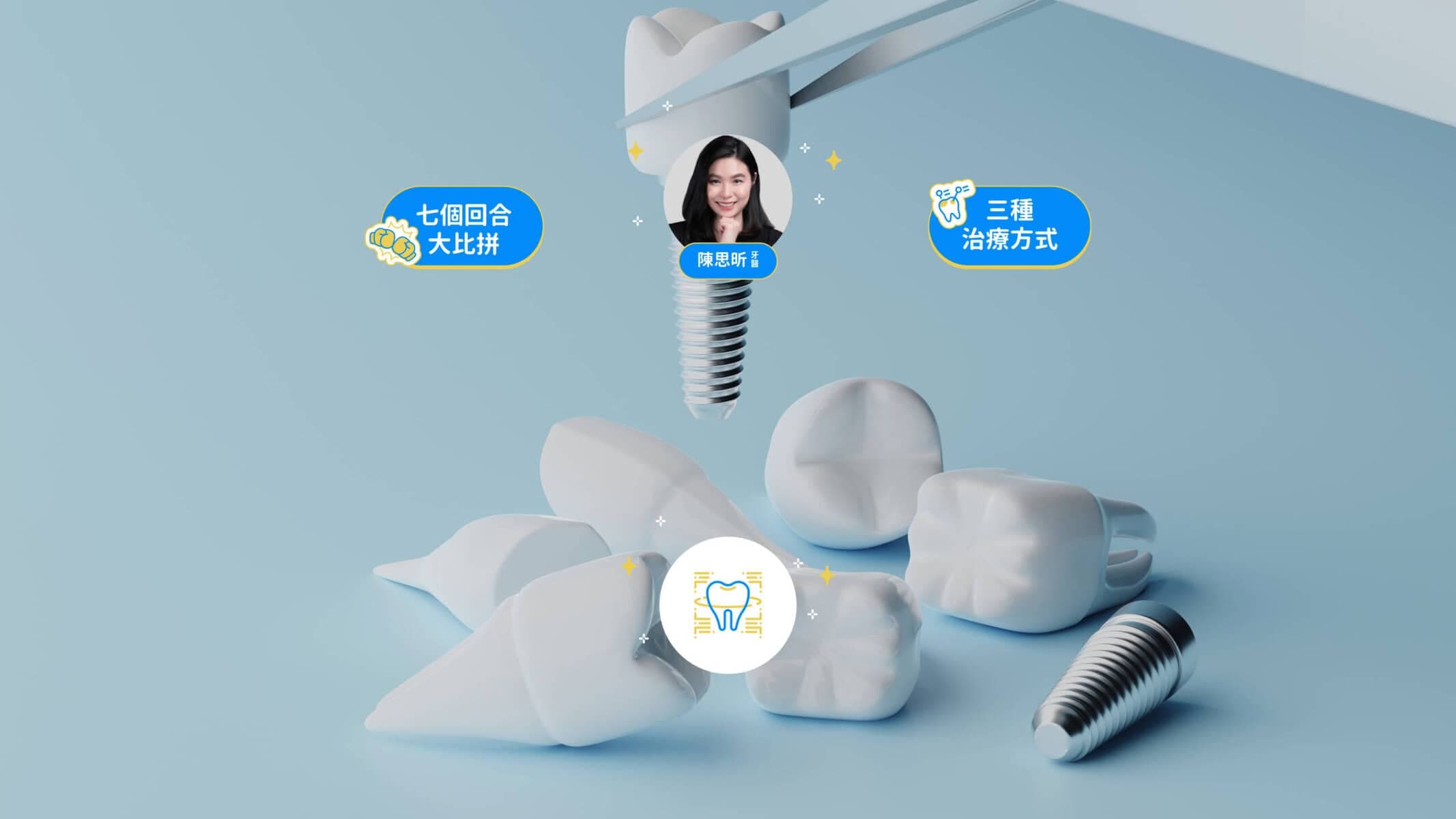
Dental Implant Success and Failure: Case Discussion
This video is provided by Home Dental. Independently reviewed by the HK Dental Guide editorial team.

A loose implant is the most misunderstood warning sign in implant dentistry, because a loose crown and a loose implant body are entirely different problems. The first is usually a straightforward repair; the second is urgent — and a patient cannot tell them apart at home. The distinction is made by examination, not by feel. Implant problems also fall into two classes: early, where the implant never integrates with bone during healing, and late, where an implant that has served for years deteriorates through peri-implantitis, overload or component problems. The causes differ, and so do the remedies.
Early versus late failure — what is the difference?
Early failure happens before osseointegration is complete: implant and bone never form a stable bond, usually for surgical-phase reasons — insufficient bone volume or quality, inadequate primary stability at placement, infection during healing, or premature loading. These implants generally need removing, with re-implantation assessed after the site heals. Late failure occurs after the implant has been in normal service; the leading culprit is peri-implantitis, followed by chronic overload (night grinding, for instance) causing bone loss or component fatigue. Late failures can often be intercepted if caught early — which is why recognising the warning signs matters.
What is peri-implantitis, and why is it harder to treat than gum disease?
Peri-implantitis is inflammation with bone loss around an implant — think of it as the implant version of periodontal disease. Several features make it more difficult to manage than gum disease around a natural tooth:
- No periodontal ligament defence — a natural tooth is surrounded by a ligament and a robust soft-tissue seal; tissue attaches to implants differently, and once inflammation breaks through, it can progress towards bone faster
- A surface that cannot easily be cleaned — implant surfaces are deliberately roughened so bone cells attach; once bacteria colonise that texture, thorough decontamination is genuinely difficult
- It usually doesn't hurt — many cases produce no significant pain, and by the time the implant feels loose, substantial bone has often already gone
The early stage — peri-implant mucositis — is reversible, which is precisely where regular reviews earn their keep.
Which patients carry the highest risk?
The principal patient-side risk factors:
- Smoking — impairs blood supply and healing, and is among the most consistent risk factors in the literature
- Poorly controlled diabetes — reduced healing and infection resistance; well-controlled diabetics carry risk close to the general population
- Untreated periodontal disease — periodontal bacteria in the mouth readily colonise implant surfaces. Placing an implant before treating gum disease means placing it into a contaminated environment
- Bruxism and heavy bite forces — with no ligament to cushion it, an implant transmits overload straight to the bone interface
- Inadequate cleaning access — particularly between implants and beneath bridgework
What about the clinician's side? How planning and execution decide outcomes
An implant is not "a screw in the jaw"; planning quality directly determines long-term performance: bone assessment and whether grafting is needed, primary stability at placement, safe distances from the sinus and nerves, implant angulation and depth, the crown-to-implant ratio, and how bite forces will be distributed. Patients cannot see these factors directly, but they can judge the process — a rigorous plan involves 3D imaging (CBCT), a written treatment proposal and an honest risk discussion. For the basic comparison of restorative options, see our implant vs bridge vs denture guide.
The specialist video below uses real success and failure cases to explain why implants go wrong and which cases can be rescued — the most direct way to grasp this section.
Which warning signs mean "see someone this week"?
Seek attention within days if you notice:
- The implant or its crown feels loose — do not wait for it to "firm up on its own"
- Pus or persistent swelling and tenderness in the gum around the implant
- Unusual pain or a sense of movement when biting
Book a prompt check — though not necessarily an emergency one — for: persistent bleeding around the implant when brushing, gum recession exposing the metal margin, or a persistent bad taste or odour at the site. One important distinction: a loose crown (a loosened screw or cement issue) is not the same as a loose implant — the former is usually a simple repair, the latter an urgent problem — but patients cannot tell them apart at home, so both deserve a prompt examination.
Can a failing implant be saved? What does salvage actually involve?
It depends on the stage and the cause:
- Mucositis stage (inflammation without bone loss) — reinforced home-care instruction plus professional cleaning; usually reversible
- Early-to-moderate peri-implantitis — thorough debridement and decontamination of the implant surface, sometimes with flap surgery or bone-regeneration procedures depending on the defect shape; outcomes depend on how much bone has gone and the defect's architecture, and can only be judged after examination
- Overload problems — bite adjustment, redesign of the restoration, a night guard where grinding is involved
- A mobile implant, or severe bone loss — the implant must come out. Removal is not the end of the road: after healing, and depending on bone condition (grafting may be needed), many sites can be re-implanted — but only after the reason for the first failure has been identified and corrected, otherwise the second attempt inherits the first attempt's odds
Why does maintenance matter more for implants than for natural teeth?
Three reasons: implants lack the periodontal ligament's defence and cushioning; early peri-implantitis is painless, so self-monitoring by feel simply does not work; and the fact that implants "cannot decay" lulls many patients into neglecting them. In reality, completion of implant treatment is the start of the long-term project, not the end: daily cleaning around the implant with interdental brushes or a water flosser, and reviews at the interval your dentist recommends — where probing depths, bleeding and radiographic bone levels are checked, which is the only reliable way early problems get caught.
What if a whole arch rests on a few implants?
Full-arch solutions (All-on-4 and similar protocols) carry a different risk profile: the biting load of an entire arch concentrates on a small number of implants, so a problem with one affects the whole arch — making case selection and maintenance standards stricter. That topic has its own section in our bite collapse and rebuilding guide, so we won't develop it here.
Frequently asked questions
How long do implants last — is it for life?
The literature consistently shows high long-term survival, with many implants serving well beyond ten years — but "surviving" is not the same as "problem-free", and peri-implantitis can arise at any stage. Longevity depends heavily on maintenance quality and risk-factor control, and no dentist can honestly guarantee a lifetime.
My implant feels loose — does that mean it has failed?
Not necessarily. A loose crown or screw is usually repairable; a loose implant body is genuine failure. The symptoms feel similar and only an examination distinguishes them — which is why looseness should be checked promptly.
Can peri-implantitis be cured?
The early mucositis stage is usually reversible; bone already lost may not fully regenerate even when treatment succeeds. The earlier it is caught, the better the chance of keeping the implant.
Can a failed site be re-implanted?
Often yes — after removing the old implant, allowing healing, assessing the bone (grafting may be required), and identifying and correcting whatever caused the first failure. Skip that last step and the second attempt is no safer than the first.
Can smokers have implants?
Smoking is not an absolute contraindication, but failure and peri-implantitis risks are clearly elevated. Stopping around the time of surgery improves healing conditions, and quitting for good helps most — a conversation worth having openly as part of the treatment plan.
Can diabetics have implants?
With good glycaemic control, implants can generally be considered and risk approaches that of the general population; with poor control, risk rises and stabilising blood sugar first is usually advised. Both your dentist and your physician should be in the loop.
Do implants still need professional cleaning?
Yes — more than ever. Professional cleaning around implants and regular reviews (probing depths, bleeding, radiographic bone levels) are the only reliable way peri-implantitis gets caught early.
Why did my implant fail when my friend's is fine?
Implant outcomes are multifactorial: bone condition, general health, smoking, grinding, cleaning habits and the quality of planning and execution all differ from person to person. Rather than comparing cases, get yours examined early to find the specific cause.
Related Questions
Can I eat immediately after dental implant surgery? Will it be painful?
It is advisable to wait until the anaesthetic has worn off before eating, and to consume soft foods only. Minimally invasive surgery generally causes...
Read related articleWill removable dentures become loose over time?
Yes. As we age, the jawbone gradually resorbs, causing the denture to no longer fit snugly. Dr. Wong Man-cheong recommends attending regular follow-up...
Read related articleIs dental implant surgery 100% successful?
Dental implants have a high success rate, but it is not 100%. Outcomes can be affected by smoking habits, systemic health conditions, and oral hygiene...
Read related articleAre there risks associated with Monitored Anesthesia Care?
All forms of sedation involving medications carry inherent risks. Potential risks include respiratory depression, a drop in blood pressure, and allerg...
Read related articleIs full mouth rehabilitation the same as implants on every tooth?
No. It is a treatment concept, and the tools may include any combination of crowns, veneers, bridges, dentures and implants. Natural teeth that can be...
Read related article