Bleeding Gums: Causes, When to See a Dentist and Gum Disease Warning Signs (Hong Kong 2026)
Written and reviewed by the HK Dental Guide editorial team · Updated 6 Oct 2026 · 11 min read
Gum Disease Explained What You Thought You Knew Might Be Wrong!
This video is an excerpt cited from Home Dental's public YouTube educational videos; reviewed by the HK Dental Guide editorial team.
On this page(9)
Gums that bleed when you brush or floss are usually gingivitis caused by plaque, not "heatiness"; with thorough cleaning they normally settle within one to two weeks. If they still bleed after that, or bleed with loose teeth, pus, swollen gums or bleeding that will not stop, see a dentist promptly (verified 2026-09-26).
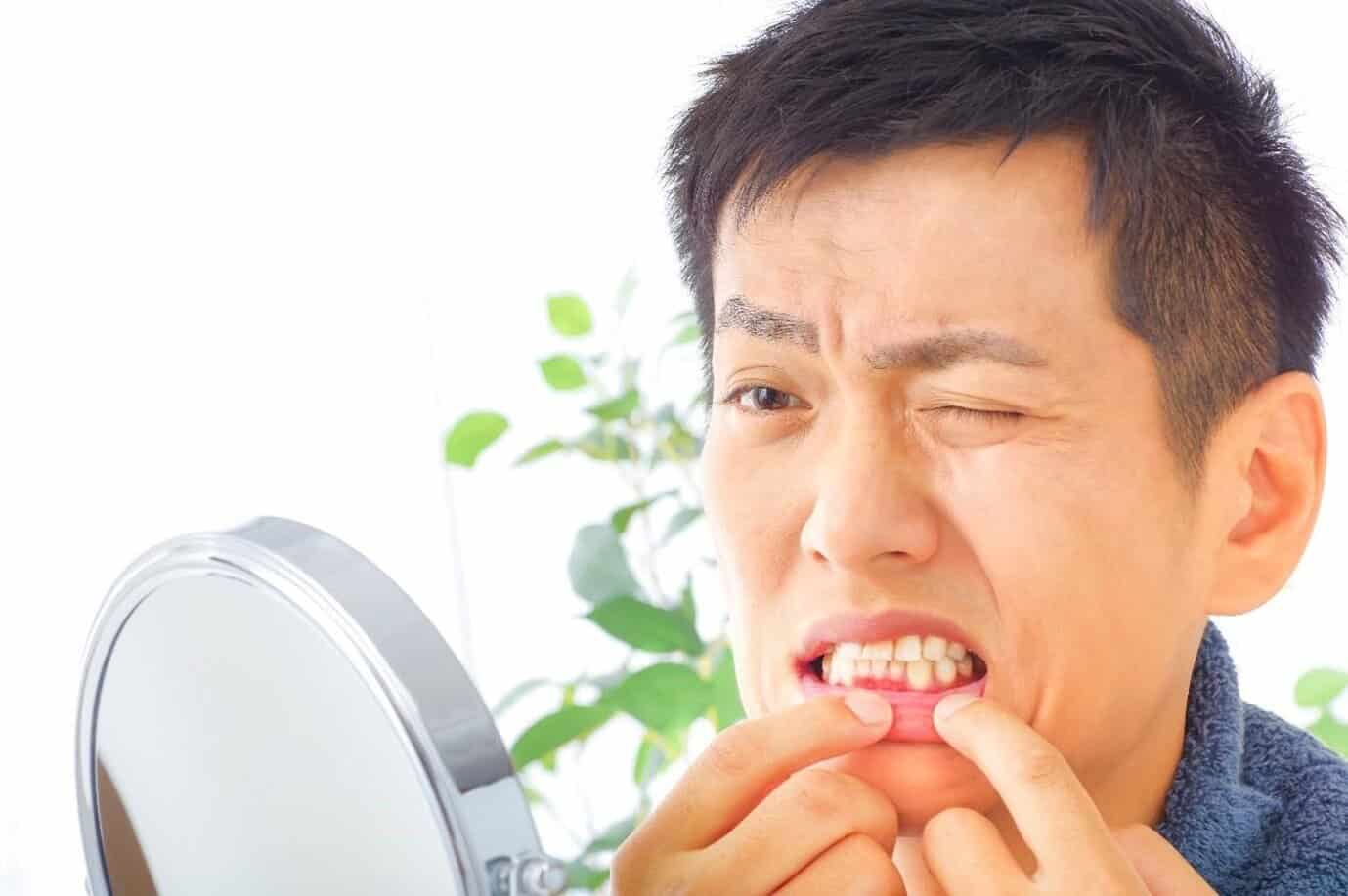
Cut your hand and you clean and cover it at once. Bleeding gums get a rinse and a shrug, or a cup of herbal tea to "clear the heat". The Department of Health is blunt: gums that bleed on brushing signal gum disease, not injury from the toothbrush1, and gum discomfort is mainly caused by periodontal disease, not "heatiness"2. This page triages in three steps: red flags that need care now, the likely cause, then a two-week self-care trial or a dental visit.
See someone now (red flags)
None of these belong in the "give it two weeks" bucket. See a dentist promptly; some need a doctor or emergency care:
- Bleeding that will not stop, or gums that bleed on their own without brushing or touching. MedlinePlus advises consulting a provider when bleeding is "severe or long-term" or comes with "other unexplained symptoms"18.
- Very painful, swollen gums, facial swelling or fever. The NHS lists "very sore and swollen gums" as grounds for an urgent dental appointment14; advancing gum disease can form periodontal abscesses with pus4.
- Loose or drifting teeth. Also an urgent dental sign on the NHS list14; the DH notes that loose teeth in adults are most often due to severe periodontal disease, so gum and bone support is already affected9.
- Pus between gum and tooth, a sign of infection inside a periodontal pocket and one of the American Academy of Periodontology's (AAP) warning signs13.
- Gum bleeding together with easy bruising, nosebleeds or unexplained bleeding elsewhere. This can point to a blood or clotting problem: MedlinePlus lists bleeding disorders, leukaemia and vitamin K deficiency among causes of bleeding gums18, and the NHS lists "bleeding or bruising easily or for no reason" as a symptom that needs an urgent GP appointment17. See a doctor, not only a dentist.
- You take anticoagulants (blood thinners). The NHS names bleeding gums, prolonged nosebleeds and severe bruising as side effects, and says severe or recurrent bleeding needs immediate medical attention15. Never stop or change the medicine without asking your doctor, and tell your dentist before any treatment.
Common causes at a glance
| Cause | Typical pattern | How to tell / what to do | Source |
|---|---|---|---|
| Gingivitis (plaque-induced) | Bleeding on brushing, flossing or eating hard food; gums red, swollen, bleed on touch | By far the most common. Plaque sitting along the gum margin releases bacterial toxins that inflame the gum; it is reversible with thorough cleaning | 1,3,13 |
| Periodontitis (established gum disease) | Receding gums, exposed roots, widening gaps, bad breath, loose teeth, pus | The gum detaches from the root to form a periodontal pocket and jawbone starts to be lost; needs a dentist's probing and X-rays, then root planing | 4,7 |
| Brushing too hard, hard bristles | Bleeding in the same spots, damaged gum edge, notched roots | MedlinePlus lists "brushing too hard" and "improper flossing" as causes; switch to a soft brush and moderate pressure, but do not clean less | 5,18 |
| Pregnancy gingivitis | Red, swollen gums that bleed on brushing during pregnancy | Hormonal changes make gums react more strongly to plaque; brushing with fluoride toothpaste morning and night plus flossing prevents most cases; months four to six are the more stable window for a check-up | 8 |
| Medicines | More bleeding than before, bruising, nosebleeds | Anticoagulants lengthen clotting time; do not stop them yourself and tell your dentist | 15,18 |
| Vitamin deficiency | Swollen, bleeding gums with tiredness and slow wound healing | Long-term vitamin C deficiency (scurvy) causes swollen, bleeding gums; vitamin K deficiency affects clotting; needs a doctor's assessment | 16,18 |
| Diabetes and other systemic disease | Gum disease progresses faster and is harder to control | The DH notes diabetes lowers the gum tissues' resistance to bacteria; the NHS advises regular dental check-ups for people with type 2 diabetes | 3,14 |
| Smoking | Bleeding may actually be less obvious while destruction continues | Smokers are up to five times or more likely to have gum disease; nicotine weakens immunity and healing | 3 |
Two terms matter. Plaque is the soft film left by incomplete brushing; calculus (tartar) is plaque that has calcified and hardened. Brushing cannot remove calculus; only scaling can2,6. Gums go red, swollen and bleed because bacterial toxins trigger a defence response3.
The four stages of gum disease and their warning signs
Gum disease starts as gingivitis. The AAP describes gingivitis as the mildest form, "reversible with professional treatment and good at-home oral care"13. If plaque keeps building, inflammation spreads below the gum line, the gum that once hugged the root separates from it to form a periodontal pocket, and the supporting bone begins to disappear4. By the time you notice receding gums, exposed roots, widening gaps or loose teeth, the gum and jawbone that support the teeth have already been damaged4,9,13; bone that has receded does not grow back on its own, which is why acting early keeps more of it. The AAP also warns that gum disease is "often silent", with symptoms that may not appear until the advanced stages13.
The 2017 AAP/EFP classification divides periodontitis into four stages, judged by a dentist with a periodontal probe and X-rays12:
| Stage | Interdental attachment loss | Bone loss (X-ray) | Teeth lost to periodontitis | What you might notice |
|---|---|---|---|---|
| Gingivitis (precursor) | None | None | None | Bleeding on brushing, red swollen gums; reversible13 |
| Stage I (initial) | 1–2 mm | Coronal third (<15%) | None | Persistent bleeding, bad breath; probing depth ≤4 mm12 |
| Stage II (moderate) | 3–4 mm | Coronal third (15%–33%) | None | Gums start to recede, roots show; probing ≤5 mm12 |
| Stage III (severe) | ≥5 mm | Middle third of root and beyond | ≤4 teeth | Widening gaps, teeth begin to loosen, pus; probing ≥6 mm12 |
| Stage IV (very severe) | ≥5 mm | Middle third of root and beyond | ≥5 teeth | Weak chewing, drifting teeth, bite collapse; needs complex rehabilitation12 |
How common is it in Hong Kong? Oral Health Survey 2021
The Department of Health's Oral Health Survey 2021, released in December 2024, found that among adults aged 35–44, 44.8% had bleeding gums on half or more of their teeth (80.1% in 2011, the "eight in ten" the previous version of this article quoted), 17.9% had calculus on half or more of their teeth (68.0% in 2011), and 57% had periodontal pockets (40% in 2011). Among non-institutionalised older persons aged 65–74, 40.7% had bleeding on half or more of their teeth (86.3% in 2011), 19.2% had calculus on half or more of their teeth, and 70% had pockets (60% in 2011)10,11. Yet only 57.3% of adults and 33.4% of older persons had a regular check-up habit, and of the adults whose toothache had disturbed their sleep, 40.8% did not see a dentist10,11. Bleeding and calculus are less common than a decade ago, pockets more so, and most people wait until something goes wrong.
What you can do yourself (the two-week trial)
With no red flags, run a one- to two-week test: clean thoroughly and watch whether the bleeding drops. "Two weeks" is this site's practical observation window, not an official threshold: the NHS standard is that gums bleeding on brushing or on hard food already warrant a dental visit14, so treat the trial as a ceiling, not a reason to delay. The reasoning behind the window: the classic experimental gingivitis study showed gingivitis develops within two to three weeks of stopping cleaning and gums return to health within days once cleaning resumes19; the DH likewise notes gum inflammation slowly subsides as hygiene improves5. If you have cleaned properly for two weeks and still bleed, it is no longer a cleaning problem: book a dentist.
- Use the DH brushing method (the same principle as the Bass technique): tilt the bristles towards the gum margin, work on two to three teeth at a time with small back-and-forth strokes at moderate pressure; do the outer, inner and chewing surfaces of the lower teeth, then the upper; brush every morning and before bed5.
- Brush the bleeding spots more, not less. Bleeding means plaque has inflamed the gum there. The DH advises switching to a soft-bristled brush to clear plaque from those areas rather than avoiding them5.
- Clean between the teeth every day. A toothbrush only reaches the tooth surfaces; plaque between teeth needs floss, a floss holder or an interdental brush5, and the NHS gives the same daily advice14. See our floss vs interdental brush vs water flosser comparison.
- Use fluoride toothpaste and brush at least twice a day14. Mouthwash is an add-on only: it cannot replace brushing and cannot remove calculus that has already bonded to the tooth.
- Stop smoking. Smoking raises gum disease risk up to five-fold or more and impairs healing after treatment3,7.
- Keep a note. Less bleeding after two weeks: keep going and book check-ups. No change: take the note to a dentist.
What the dentist will do
The dentist first measures pocket depths with a periodontal probe and takes X-rays where needed, to confirm gingivitis versus periodontitis and the stage7,12. Treatment then runs in three tiers:
- Scaling removes plaque, calculus and stains stuck to the tooth surface and leaves it clean and smooth6. People with gum disease may feel mild discomfort and some gum bleeding for a few days afterwards; the DH describes this as normal and expects it to settle as hygiene improves6.
- Root planing (deep cleaning) treats more advanced gum disease. Under local anaesthetic, hand instruments or an ultrasonic scaler thoroughly clean plaque and calculus from inside the pockets and off the root surfaces so the gum can re-attach and the pocket close4,7; where pockets are too deep, periodontal flap surgery may be needed7.
- Maintenance. The DH notes a full course for periodontitis involves several follow-up visits and regular check-ups, and that quitting smoking is key to healing7. Gum disease is chronic: maintenance after treatment matters as much as daily cleaning.
Routine scaling and deep cleaning are priced differently, and public and private fees are far apart: see the deep cleaning fee benchmark for figures and sources and the scaling charges guide for how the visit and quote work.
Public and subsidised routes
- Community Dental Support Programme (CDSP) covers oral examination, X-rays, fillings, extractions, scaling, root canal treatment and removable dentures. Category A participants (for example those with a full medical fee waiver) receive scaling fully subsidised by the government; Category B pay a $50 co-payment for scaling. Eligible groups include Old Age Living Allowance recipients and Hospital Authority medical fee waiver holders; apply by contacting a participating clinic directly or through a registered social worker20.
- DH public dental (general public sessions) provide emergency pain relief or extraction only and do not include scaling, fillings or dentures; eligible persons are free, non-eligible persons pay $850 per visit (from 1 January 2026)21. They cannot help with bleeding gums that need scaling.
- Elderly Health Care Vouchers, the elderly dental assistance scheme and other routes are set out in our dental subsidies overview.
Frequently asked questions
Is it normal for gums to bleed when brushing?
No. The DH says bleeding on brushing is a signal of gum disease, not brushing injury and not "heatiness"; herbal tea can only ease discomfort for a while and cannot remove plaque or calculus1,2. Healthy gums are pink, hug the teeth and do not bleed when brushed9.
Which toothpaste should I use for bleeding gums?
What matters is fluoride toothpaste plus correct brushing and daily interdental cleaning5,14, not a particular brand. Mouthwash is a supplement: it cannot replace brushing or remove calculus, and relying on it while skipping scaling masks the problem and lets gum disease worsen.
Do bleeding gums mean I need scaling?
If calculus is behind the bleeding, brushing cannot shift it; scaling removes the prime causes of gum disease, plaque and calculus2,6. Soreness and bleeding during scaling reflect how much calculus has built up and how inflamed the gums are, not "the more it hurts, the cleaner it gets"; if you have bled for a long time, bleeding during scaling is a normal part of clearing the source6.
Can gum disease be reversed?
Gingivitis can be reversed13. Once periodontitis has set in, the jawbone has already receded4 and lost bone does not regrow, but root planing, surgery where needed and regular maintenance can close pockets and control the disease4,7. The earlier you act, the more tissue you keep.
How long should I wait before seeing a dentist about bleeding gums?
The NHS standard is simple: see a dentist if your gums bleed when you brush or eat hard foods14. In practice you can clean thoroughly for one to two weeks first; gums usually improve within days of proper cleaning19. If they still bleed after that, or any red flag above appears, stop waiting.
My gums bleed during pregnancy. What should I do?
Hormonal changes in pregnancy make gums react more strongly to plaque, so they redden, swell and bleed more easily. The DH says brushing with fluoride toothpaste morning and night and flossing thoroughly can prevent pregnancy gingivitis, and suggests a dental check-up in months four to six when the pregnancy is more stable8. The NHS also advises regular visits to a dentist and hygienist during pregnancy14.
Related guides
- Gum recession: causes and treatment: what to do about exposed roots and teeth that look longer.
- Brushing too hard: telling brushing damage apart from gum disease bleeding.
- Gum problems treatment guide: the full range of options from gingivitis to periodontal surgery.
- Floss, interdental brush or water flosser: choosing interdental tools.
- How to verify a dentist in Hong Kong: checking the Dental Council register and specialist status.
- Hong Kong dental fees overview: public, subsidised and private ranges for scaling, deep cleaning and periodontal treatment.
Sources
- Department of Health, Oral Health Promotion Division, Love Teeth Campaign 2026, "Bleeding gums when brushing", toothclub.gov.hk/en/teeth_b.html, verified 2026-09-26.
- Department of Health, Oral Health Promotion Division, "Gum discomfort: is it heatiness?", toothclub.gov.hk/en/teeth_c.html, verified 2026-09-26.
- Department of Health, Oral Health Promotion Division, Oral diseases: gum disease (causes and risk factors), toothclub.gov.hk/en/en_adu_01_04_01.html, verified 2026-09-26.
- Department of Health, Oral Health Promotion Division, Gum disease: progression, periodontal pockets and treatment, toothclub.gov.hk/chi/adu_01_04_01_06.html and adu_01_04_01_04.html, verified 2026-09-26.
- Department of Health, Oral Health Promotion Division, Oral care tips: toothbrushing and interdental cleaning, toothclub.gov.hk/en/en_adu_01_02_01.html, verified 2026-09-26.
- Department of Health, Oral Health Promotion Division, Dental treatment: scaling, toothclub.gov.hk/chi/adu_01_06_04.html, verified 2026-09-26.
- Department of Health, Oral Health Promotion Division, Dental treatment: root planing, toothclub.gov.hk/chi/adu_01_06_13.html, verified 2026-09-26.
- Department of Health, Oral Health Promotion Division, Oral care during pregnancy, toothclub.gov.hk/chi/adu_01_07_01.html, verified 2026-09-26.
- Department of Health, Oral Health Promotion Division, "Loose teeth, weak chewing" and "Teeth look longer", toothclub.gov.hk/chi/teeth_f.html, teeth_e.html, verified 2026-09-26.
- HKSAR Government press release (2024-12-06), "DH releases latest Report of Oral Health Survey", info.gov.hk P2024120600365, verified 2026-09-26.
- Department of Health, Report of Oral Health Survey 2021: Highlights, toothclub.gov.hk (PDF), verified 2026-09-26.
- American Academy of Periodontology, Staging and Grading Periodontitis (2017 classification), perio.org (PDF), verified 2026-09-26.
- American Academy of Periodontology, Gum Disease Information, perio.org/for-patients/gum-disease-information/, verified 2026-09-26.
- NHS, Gum disease, nhs.uk/conditions/gum-disease/, verified 2026-09-26.
- NHS, Anticoagulant medicines, nhs.uk/conditions/anticoagulants/, verified 2026-09-26.
- NHS, Scurvy, nhs.uk/conditions/scurvy/, verified 2026-09-26.
- NHS, Acute myeloid leukaemia: symptoms, nhs.uk/conditions/acute-myeloid-leukaemia/symptoms/, verified 2026-09-26.
- MedlinePlus (US National Library of Medicine), Bleeding gums (reviewed 2026-02-05), medlineplus.gov/ency/article/003062.htm, verified 2026-09-26.
- Löe H, Theilade E, Jensen SB. Experimental gingivitis in man. Journal of Periodontology 1965;36(3):177–187, doi:10.1902/jop.1965.36.3.177, verified 2026-09-26.
- Community Dental Support Programme, Introduction (covered services, Category A/B fees), communitydental.gov.hk, verified 2026-09-26.
- Department of Health, Public dental services (general public session scope and fees), dh.gov.hk/tc_chi/main/main_ds/main_ds_public.html, verified 2026-09-26.
Found this useful? Pass it on
One tap to send it to family or friends on WhatsApp.
Related Questions
Will scaling make my teeth gaps larger?
Scaling itself does not enlarge tooth gaps. The sensation of wider gaps occurs because the swollen gum tissue and tartar that had been filling the spa...
Read related articleIn Hong Kong in 2026, is it better value to buy a water flosser or dental floss?
Traditional dental floss is low in cost and highly effective at cleaning, making it the ideal everyday option for most people. Water flossers require...
Read related articleIs scaling really necessary?
Calculus cannot be brushed off; only dental instruments remove it, and its rough surface collects more plaque, which is where gum disease starts [1][4...
Read related articleCan I go to the dentist with tonsillitis?
For routine care (check-ups, scaling, fillings) it is usually better to reschedule. The NHS lists a high temperature, painful swallowing, earache and...
Read related articleHow much does scaling cost in Hong Kong?
Routine scaling is typically $500–700 at a private clinic [8] and $1,000–2,800 at a private hospital [6][7]; eligible people pay nothing or $50 under...
Read related article