How to Choose a Toothpaste: Fluoride, Sensitivity, Whitening and Children's Amounts
Written and reviewed by the HK Dental Guide editorial team · Updated 19 Oct 2026 · 9 min read
On this page(11)
The most important thing when choosing a toothpaste is whether it contains fluoride, and enough of it. Hong Kong's Department of Health says brushing daily with fluoride toothpaste reduces tooth decay, and the World Health Organization recommends brushing twice a day with toothpaste containing 1,000 to 1,500 ppm fluoride. Sensitivity relief, whitening or SLS-free formulas are extras to choose by need. Here is each point in turn, with official guidance and Consumer Council test results.
1. Check the fluoride first
Fluoride helps "remineralise" the tooth surface and makes teeth more resistant to acid. According to the Department of Health:
- adult toothpastes on the market usually contain 1,000–1,450 ppm fluoride, and children's toothpastes 500–1,000 ppm;
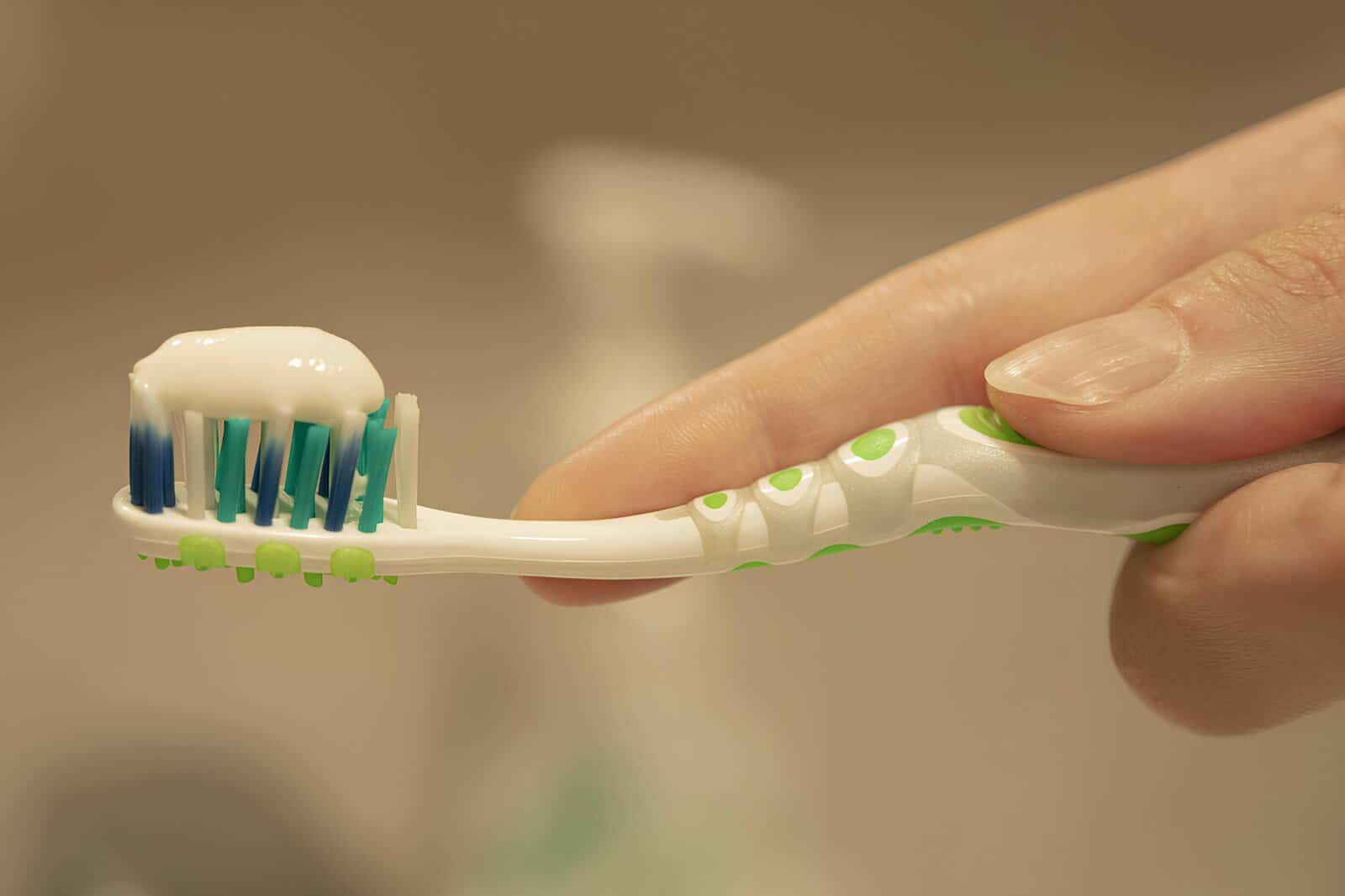
- brush every morning and before bed with a pea-sized amount;
- Hong Kong has fluoridated its tap water since 1961, currently at 0.5 ppm;
- most people don't need a fluoride mouthwash, and children under 6 should avoid mouthwash.
Source: Department of Health oral health education: fluoride.
The UK's NHS recommends that adults use toothpaste with at least 1,350 ppm fluoride; the WHO recommends 1,000–1,500 ppm, twice a day. Look for "ppm" or "%" on the pack: 0.1% is about 1,000 ppm.
2. Spit, don't rinse
The NHS advises spitting out toothpaste after brushing but not rinsing with water straight away, because rinsing washes away the fluoride. If you use mouthwash, use it at a different time, such as after lunch.
3. How much for children?
| Age | Department of Health amount | NHS fluoride level |
|---|---|---|
| Under 3 | No more than a thin smear (about a grain of rice) | At least 1,000 ppm, a smear only |
| 3 to 6 | No more than a pea-sized amount | 1,000–1,500 ppm, pea-sized |
| Over 6 | Pea-sized | As for adults |
The Department of Health warns that young children who swallow too much fluoride may later have white marks on their permanent teeth (dental fluorosis), so parents should control the amount and make sure children spit. Another Department of Health page for parents suggests brushing a baby's teeth without toothpaste at first and starting once the child can spit (Chinese). Both pieces of advice focus on controlling the amount; talk to a dentist about your child's decay risk. For more, see our children's dental guide.
4. Sensitive teeth: choose a sensitivity toothpaste
The Department of Health explains that sensitivity toothpastes either interfere with nerve signals or seal the tiny tubules in exposed dentine, with potassium nitrate or arginine as the main ingredients (Department of Health: oral care products, Chinese).
On the evidence: a 2023 network meta-analysis (68 randomised trials, 4,638 people) found that toothpastes with stannous fluoride, potassium (with or without stannous) and arginine reduced sensitivity, and the American Dental Association cites it in recommending twice-daily use, though the evidence quality was low to moderate (ADA). An earlier Cochrane review (2006, six studies) found no clear evidence for potassium-containing toothpastes on their own (Cochrane: potassium toothpastes for dentine hypersensitivity). In practice: pick one and use it steadily for a few weeks to judge.
If sensitivity continues after switching, or hot and cold pain gets worse, it may be decay, a cracked tooth or gum recession; see a dentist. See also gum recession and cracked teeth.
5. Whitening toothpaste: surface stains only
The Department of Health says whitening toothpastes contain coarser particles that scrub off surface stains, and their long-term effect on teeth is not yet known. The ADA says whitening toothpastes mainly rely on abrasives to remove surface stains and won't significantly change the tooth's own colour.
The ADA considers toothpastes with an abrasivity (RDA) of 250 or less safe and effective, and every toothpaste with its Seal of Acceptance must have an RDA of 250 or less (ADA: Toothpastes). To change the tooth's own colour, see professional whitening.
6. Charcoal toothpaste: not enough evidence
The ADA says there is insufficient evidence that charcoal oral-care products whiten teeth safely and effectively. A 2017 review in the Journal of the American Dental Association looked at 50 charcoal products and found only one contained fluoride, even though 38% claimed to strengthen teeth.
7. Frequent mouth ulcers: try SLS-free
Sodium lauryl sulphate (SLS) is a common foaming agent. The NHS advises not using toothpaste containing SLS while you have mouth ulcers (NHS: Mouth ulcers). A 2019 systematic review of four crossover randomised trials found that people with recurrent ulcers who used SLS-free toothpaste had on average about one fewer ulcer, ulcers lasting about two days less and less pain, but the trials were small and none was at low risk of bias, so treat the result with caution (Dental Elf: commentary on Alli et al. 2019). See mouth ulcers: causes and relief.
What did the Consumer Council's tests find?
In 2022 the Consumer Council tested 30 toothpastes (17 general-use, 13 for children) priced HK$10 to HK$100:
- the 6 fluoride children's toothpastes measured 0.042%–0.061% fluoride (about 420–610 ppm), and 2 did not meet the mainland standard (0.05%–0.11%);
- all 9 fluoride general toothpastes met the standard, but 3 didn't label the fluoride content;
- 3 children's toothpastes had a pH below 5.5;
- 27 contained trace arsenic or lead, all within limits;
- 16 contained allergenic fragrances (eugenol or limonene), including 4 children's toothpastes;
- only 23 listed full ingredients in Chinese and English, and 2 had no expiry date.
The Council advises a small smear of fluoride toothpaste for under-3s, a pea-sized amount for ages 3 to 6, and spitting it out after brushing.
Quick guide
| Your situation | What to choose |
|---|---|
| Most adults | Fluoride 1,000–1,450 ppm (or more) |
| Sensitive teeth | Fluoride plus potassium nitrate, stannous fluoride or arginine |
| Frequent mouth ulcers | Fluoride and SLS-free |
| Tea or coffee stains | Fluoride whitening toothpaste; don't brush too hard |
| Children | Control the amount by age and supervise spitting |
Toothpaste can't remove hardened tartar. Regular check-ups and scaling are still needed.
Frequently asked questions
Does more toothpaste clean better?
No. Hong Kong's Department of Health advises adults to brush every morning and night with a pea-sized amount of fluoride toothpaste (Department of Health: fluoride); what matters is brushing thoroughly, then spitting out without rinsing straight away.
Should I rinse after brushing?
The NHS advises spitting out toothpaste without rinsing straight away, so fluoride stays on the teeth.
Can children use adult toothpaste?
The Consumer Council says under-3s can use a small smear of ordinary adult fluoride toothpaste; controlling the amount and supervising spitting are what matter.
Can toothpaste remove tartar?
No. Cleveland Clinic says that once tartar has formed, brushing and flossing alone can't remove it; a dentist or dental hygienist removes it during a professional cleaning (Cleveland Clinic: Tartar). For scaling fees, see the 2026 Hong Kong scaling price benchmark.
Do I need a different toothpaste in summer? Is there a "summer toothpaste ingredient"?
No need to switch. Neither the WHO nor Hong Kong's Department of Health gives season-specific advice: the key is still brushing morning and night with fluoride toothpaste, and the WHO recommends 1,000–1,500 ppm (WHO: Oral health). If you drink more in hot weather, the WHO also advises limiting free sugars and making water your main drink.
Which ingredients should I look for to protect my gums?
The American Dental Association says some toothpastes add ingredients that help reduce gingivitis, but it does not list which ones (ADA: Toothpastes). The NHS advice for preventing gum disease is: brush at least twice a day with fluoride toothpaste, spit and don't rinse; clean between your teeth every day with floss or interdental brushes; and have regular check-ups with a dentist and dental hygienist (NHS: Gum disease). For bleeding or swollen gums, see bleeding gums: what to do and gum problems explained.
Is fluoride-free toothpaste suitable for everyday use?
The Department of Health, the WHO and the NHS all recommend fluoride toothpaste to prevent decay (see section 1 above). The ADA also requires every toothpaste that claims cavity protection and carries its Seal of Acceptance to contain fluoride. If you want to avoid fluoride for personal reasons, talk to your dentist about your own decay risk first; for children, the Department of Health's focus is on controlling the amount by age and supervising spitting (see section 3).
Which sensitivity ingredients have evidence behind them?
The ADA (updated February 2026) cites a network meta-analysis finding that toothpastes containing stannous (stannous fluoride), potassium (with or without stannous) or arginine, used twice a day, can reduce sensitivity, though the quality of evidence is low to moderate. Use one product consistently for a few weeks to judge it; if sensitivity persists or hot-and-cold pain gets worse, see a dentist to rule out decay, a cracked tooth or gum recession. For choosing a brush, see our toothbrush guide.
What types of toothpaste are there?
Hong Kong's Department of Health groups toothpastes by purpose: decay prevention (fluoride; adult toothpastes usually 1,000–1,450 ppm, children's 500–1,000 ppm), desensitising (for example potassium nitrate or arginine), whitening (coarser particles that scrub off surface stains) and tartar control (for example pyrophosphate or zinc citrate) (Department of Health: oral care products, Chinese). Many toothpastes combine several of these; whichever you choose, the common message from the Department of Health and the WHO is to use fluoride. For how decay progresses from early changes to needing treatment, see the 4 stages of tooth decay.
What do stannous fluoride, potassium nitrate, pyrophosphate and zinc citrate on the label do?
According to the Department of Health: sodium fluoride, monofluorophosphate and stannous fluoride are fluorides for preventing decay; potassium nitrate and arginine are desensitising ingredients; and pyrophosphate and zinc citrate are said to hinder the calcification of plaque and slow tartar build-up (Department of Health: oral care products, Chinese). The ADA notes that SLS is a foaming agent, and that SLS, pyrophosphates and citrates (such as zinc or potassium citrate) are among the ingredients that have been reported as allergens or irritants (ADA: Toothpastes). A tartar-control toothpaste slows tartar build-up but cannot remove tartar that has already formed; that still needs a scale and clean — see can you remove tartar yourself?
Has the Consumer Council tested whether sensitivity or whitening toothpastes work?
The Consumer Council's 2022 test of 30 toothpastes focused on fluoride content, pH, heavy metals, allergenic fragrances and labelling; it noted that many toothpastes advertise sensitivity relief, whitening or tartar control, but did not report test results for those claims (Consumer Council CHOICE #552). The Council advises people who have had allergic reactions to read the ingredient list carefully when choosing oral-care products. For the research evidence on sensitivity ingredients, see section 4 above; the Department of Health also advises seeing a dentist before using a desensitising toothpaste to find the cause of the sensitivity, and asking a dentist again if symptoms persist.
Sources
- Department of Health oral health education: fluoride
- Department of Health oral health education: oral care products (Chinese)
- Department of Health oral health education: brushing for young children (Chinese)
- NHS: How to keep your teeth clean (reviewed 2025-06-30)
- NHS: Taking care of children's teeth (reviewed 2025-06-30)
- World Health Organization: Oral health (2025-03-17)
- American Dental Association: Toothpastes (updated 2026-02-11)
- American Dental Association: Whitening
- Consumer Council CHOICE #552: toothpaste tests (2022-10-17)
- Newswise: charcoal toothpaste review (JADA 2017)
- NHS: Gum disease (reviewed 2026-04-20)
- NHS: Mouth ulcers (reviewed 2024-03-11)
- Cochrane: potassium containing toothpastes for dentine hypersensitivity (2006)
- Dental Elf: SLS-free toothpaste and recurrent mouth ulcers (Alli et al., J Oral Pathol Med 2019)
- Cleveland Clinic: Tartar (updated 2023-06-19; checked 2026-10-19)
This article is general health information and does not replace individual advice from a dentist.
Found this useful? Pass it on
One tap to send it to family or friends on WhatsApp.
Related Questions
If my child's gums bleed after scaling, does that mean the dentist was too rough?
Mild discomfort or gum bleeding in the days following scaling is normal. This is typically caused by mild gum inflammation triggered by pre-existing p...
Read related articleWhen buying a toothbrush in Hong Kong in 2026, does a more expensive brand necessarily mean better quality?
Not necessarily. As Professor Chu points out, brush head shape and handle design come down to personal preference. As long as the bristles are soft an...
Read related articleWhy should I not brush my teeth immediately after an acid reflux episode?
Stomach acid temporarily softens the tooth enamel. If you brush immediately, the physical friction of the toothbrush will directly abrade the weakened...
Read related articleIf my jaw clicks when I open my mouth, does it always need to be treated?
If there is only a clicking sound without any pain or functional limitation (such as being unable to open the mouth fully), it is generally advisable...
Read related articleAre cold sores contagious?
Yes, from the first tingle until they have fully healed. They spread by kissing and shared items.
Read related article