【Dental Emergency】Knocked Out a Tooth? The "Milk Method" — Save Your Tooth in the Golden 60 Minutes! 🥛 (2026 Quick Guide)
Written and reviewed by the HK Dental Guide editorial team · Updated 25 Sept 2026 · 4 min read
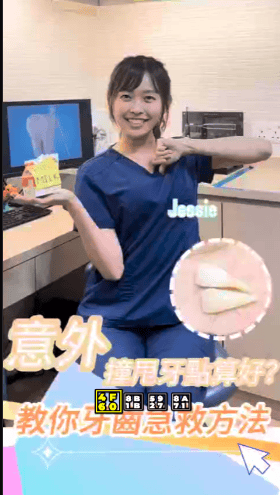
"Oh no! My tooth just got knocked out!" 😱 Taking a ball to the face during sports, falling off a bicycle, or even a physical altercation… accidents can happen at any time. Many people assume that once a tooth is knocked out, it's gone for good and the only option is a dental implant. Wrong! With the right handling, there is actually a very good chance of successfully reimplanting that permanent tooth!
Today, we'll show you how to make the most of the **"Golden 60 Minutes"** to save your tooth!
🛑 Warning: 2 Things You Must NEVER Do When a Tooth Is Knocked Out!
When you see your tooth on the ground, don't panic and act carelessly. The following two actions are **"tooth-destroying mistakes"** that must be avoided at all costs:
❌ 1. Never wrap it in a tissue!
This is the most common mistake! The surface of the tooth root contains a precious layer of Periodontal Ligament Cells. Wrapping the tooth in a tissue will instantly absorb the moisture from these cells, causing the tooth to "dehydrate" and the cells to die. Once the cells are dead, the tooth cannot be reimplanted successfully.
❌ 2. Never scrub or rinse the root!
Think it fell on the ground and needs a good scrub? Absolutely do not! Scrubbing with a brush or vigorous rubbing will directly destroy the cells essential for tooth reimplantation. If the tooth is dirty, simply rinse it gently with saline solution or milk for a moment.
The Correct 4-Step First Aid: Remember the "Milk Method" 🥛
The Department of Health notes that the sooner a knocked-out permanent tooth is put back, the greater the chance of preserving it. Stay calm and follow these steps:
Step 1: Pick Up the Tooth (Hold the White Part Only)
Remember to hold the tooth by the crown (the white part), and never let your fingers touch the root (the yellowish pointed part), to avoid damaging the cells.
Step 2: Rinse Gently (If Necessary)
If there is dirt or debris on the root, gently rinse it with saline solution or fresh milk for 1–2 seconds. Important: Do not rinse under tap water for too long, and do not rub with your hands!
Step 3: If You Can, Put It Straight Back in the Socket
For a permanent tooth, the Department of Health advises rinsing off any dirt, putting the tooth straight back into its socket, asking the injured person to bite gently to hold it in place, and going to a dentist at once. Do not put a baby tooth back (see the FAQ below).
Step 4: If It Can't Go Back, Keep It Moist (Critical!)
This is the key to saving the tooth! You must keep the cells on the root alive:
-
🥇 First choice: Place it in milk.
-
Why milk? Because milk's pH and osmotic pressure are closest to that of human cells, allowing the periodontal ligament cells to survive for longer.
-
-
🥈 Second option: Place it in saline solution.
-
🥉 Last resort: Hold it in your mouth.
-
Place it under the tongue or inside the cheek, and let your saliva keep it moist (but be careful not to swallow it!).
-
-
❌ Never store it in plain water or tap water! The osmotic pressure of water will cause the cells to swell and burst (hypotonic damage).
Step 5: Seek Immediate Dental Treatment (The Golden 60 Minutes)
Take the tooth — kept in milk — and go to a dentist immediately, right now, without delay! If reimplantation is performed within 30–60 minutes, the success rate of saving the tooth is very high. After 2 hours, the survival rate of the cells drops dramatically.
🧐 Frequently Asked Questions (FAQ)
Q: If a child's baby tooth (primary tooth) is knocked out, should it be put back in? A: Absolutely not! If it is confirmed to be a baby tooth, reimplantation is generally not recommended, as reinserting it may damage the developing permanent tooth bud underneath. Bring the child and the tooth to see a dentist for an assessment.
Q: What if I can't find any milk? A: If milk and saline solution are truly unavailable, having the injured person hold the tooth inside their mouth (against the inner cheek) is a workable alternative, using their own saliva to protect the cells.
Q: What will the dentist do to save the tooth? A: The dentist will clean the tooth, reinsert it into the tooth socket, and secure it with a wire splint for a few weeks. Root canal treatment may also be required afterwards.
💡 Summary
"Your tooth matters to us!" Accidents are unpredictable, but knowledge can save the day. If this ever happens to you, remember the golden rule: Hold by the crown ➡️ Store in milk ➡️ See a dentist immediately — there's no need to panic!
👇 Dental Emergency? Not Sure Where to Find a Dentist?
Knocked-out tooth, severe toothache, uncontrolled bleeding? This cannot wait! Use our AI Dental Emergency Advisor right away to get an initial assessment of your situation and quickly locate nearby clinics offering emergency dental services.
👉 Click the 【AI Dental Emergency Assistant】 icon at the bottom right of the page to start a free consultation ↘️
(HK Dental Guide is committed to promoting accurate dental health knowledge. The information in this article is for reference only. Please seek medical attention promptly for any dental emergencies.)
Found this useful? Pass it on
One tap to send it to family or friends on WhatsApp.
Related Questions
My toothache suddenly stopped — does that mean it has healed?
Not necessarily. Pain is only a signal, and a weaker signal may simply mean less stimulation, a painkiller temporarily masking the pain, a change in t...
Read related articleCan I go to A&E for a toothache?
Only with red flags: swelling reaching the eye or neck, trouble breathing or swallowing, bleeding that will not stop, or a jaw injury. A&E gives pain...
Read related articleCan a cavity heal on its own? If the pain suddenly stops in the middle of the night, do I still need to see a dentist?
Absolutely not. Tooth decay causes irreversible tissue damage. If severe pain suddenly subsides in the night, it may indicate that the nerve has alrea...
Read related article