


"Doctor, does extracting wisdom teeth make your face slimmer?" "My tooth doesn't hurt. Can I leave it alone?"
This is the most common consultation received by dental clinics. Many folk remedies circulate about wisdom teeth, and some people even request extractions to improve their facial structure. However, are these beliefs medically sound?
This issue of HK Dental Guide features Jessie, a dental professional from WeTeethSobi , who debunks urban legends from a professional medical perspective and provides guidance for accurate clinical judgment.
1. Medical Demystification: Is Removing Wisdom Teeth Equivalent to Free Cosmetic Surgery?
Regarding the claim that "tooth extraction can slim the face," Jessie has given a clear clinical answer in the video: it will not.
To understand this, we need to start with facial anatomy:
Skeletal support: The width of the face mainly depends on the shape and angle of the mandible. Wisdom teeth grow at the very end of the alveolar bone, and their removal does not change the physical lines of the mandible itself.
Muscle thickness: Another factor that affects facial shape is the thickness of the masseter muscle .
Some patients feel their face looks smaller after tooth extraction, usually due to reduced food intake (weight loss) in the short term after surgery or the visual difference after the wound swelling subsides, not because the bones have shrunk. Undergoing surgery solely for facial slimming not only fails to achieve the desired effect but also carries risks such as postoperative swelling, lower lip numbness, and nerve damage.
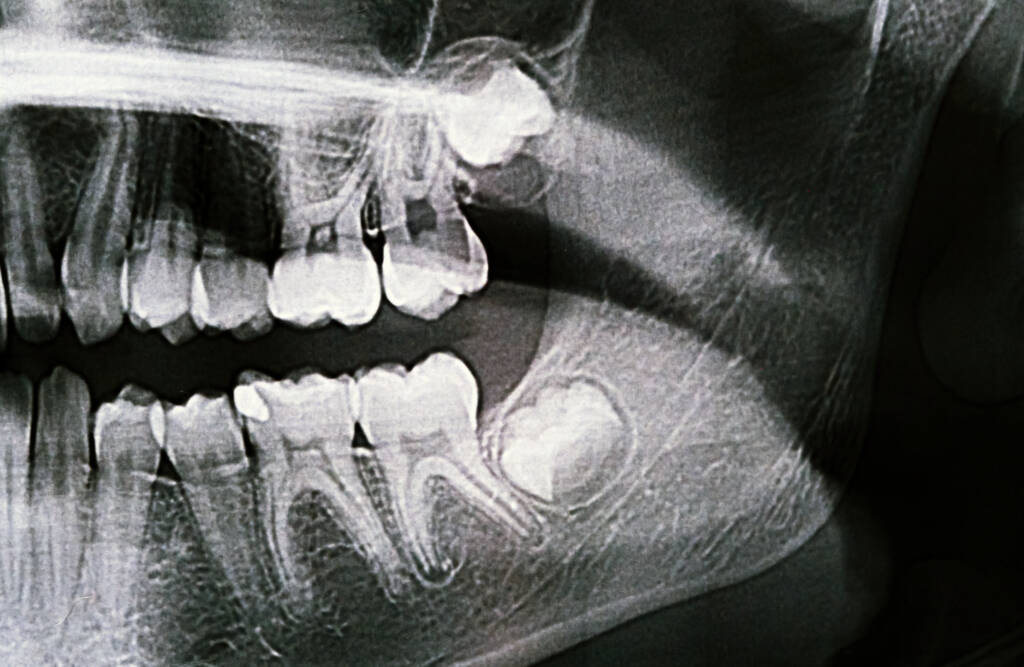
2. Clinical Guidelines: These 3 types of "impacted growth" must be treated.
While tooth extraction won't slim your face, if an X-ray confirms an impacted wisdom tooth and the following signs are present, dentists will usually recommend extraction as soon as possible to prevent future problems:
Scenario 1: Horizontal Impaction
This is the most common and challenging situation in clinical practice. The wisdom tooth grows horizontally, with its crown directly pressing against the molar in front. This structure is like a time bomb, which will continue to push against the dentition in the long run, and may even lead to severe pain and root resorption.
Scenario 2: Recurrent "pericoronitis"
Because impacted wisdom teeth are located deep inside the gum line, they are difficult to reach with a toothbrush, and food debris easily accumulates in the "blind pockets" covered by the gums. Bacterial growth can lead to pericoronitis , with clinical symptoms including red and swollen gums, difficulty opening the mouth, pain when swallowing, and even suppuration. If left untreated, the inflammation will recur.
Scenario 3: Irreversible decay of adjacent teeth
This is a key risk that Jessie particularly emphasizes. An angled wisdom tooth can create an angle with the second molar in front , making it extremely prone to accumulating debris. Often, by the time the patient feels pain, the healthy second molar in front has already decayed. Because this location is extremely difficult to fill or root canal, it can ultimately lead to the tragic consequence of **"both teeth must be extracted simultaneously to save the patient's life "**.
Clinical X-ray demonstration: Horizontal wisdom tooth severely compressing the anterior molar.
3. Retention conditions: Under what circumstances can the tube not be removed?
Not all wisdom teeth need to be extracted. According to clinical guidelines, patients can choose to "coexist peacefully" with their wisdom teeth if they meet the following two conditions:
Complete eruption and occlusion: The teeth grow vertically and normally, fully erupt from the gums, and can form a normal occlusal function with the opposing teeth.
Deep bone impaction: The tooth is completely embedded deep in the alveolar bone with no signs of eruption. X-rays show no compression of nerves or formation of lesions or cysts.
4. Expert advice: Golden processing period
Regarding the best time for tooth extraction, the dental community generally recommends an evaluation between the ages of 18 and 25.
At this stage, the roots of wisdom teeth are not yet fully developed, and they are usually far from the nerve. Furthermore, the bones of young people are more flexible. Compared to middle-aged and elderly individuals, extraction surgery at this time is less difficult, wounds heal fastest, and the risk of postoperative complications is relatively minimal.
💰 Worried about expensive tooth extraction? Now that these 3 situations must be addressed, the next step is to understand the costs. See: Wisdom Teeth Removal Price Strategy in Hong Kong 2026: General vs Specialist Fees List
👇 Suspect your wisdom teeth are causing oral problems?
If you are unsure what type of teeth you have, or are concerned about the potential risk of cavities, do not make your own diagnosis.
Welcome to our AI dental assistant , which will provide you with an initial symptom analysis and a price reference for related services throughout Hong Kong:
👉Please click the icon for "AI Dental Emergency Helper" in the bottom right corner of the page to start a consultation.