


If you are searching for the price of teeth cleaning in Hong Kong in 2026, you may find that the market prices vary greatly, ranging from a few hundred dollars to over ten thousand dollars. This is not simply a price fluctuation, but because "regular teeth cleaning" and "deep teeth cleaning" are two completely different medical procedures.
A standard teeth scaling procedure typically costs between HK$500 and HK$1,000, primarily for preventative gum health care. However, if you have moderate to severe periodontal disease, you will need a deep cleaning (root scaling), which usually costs between HK$6,800 and HK$14,000 for a full mouth treatment. This article will break down the differences between these two procedures from a medical perspective and analyze why deep cleaning is the last line of defense for saving loose teeth.
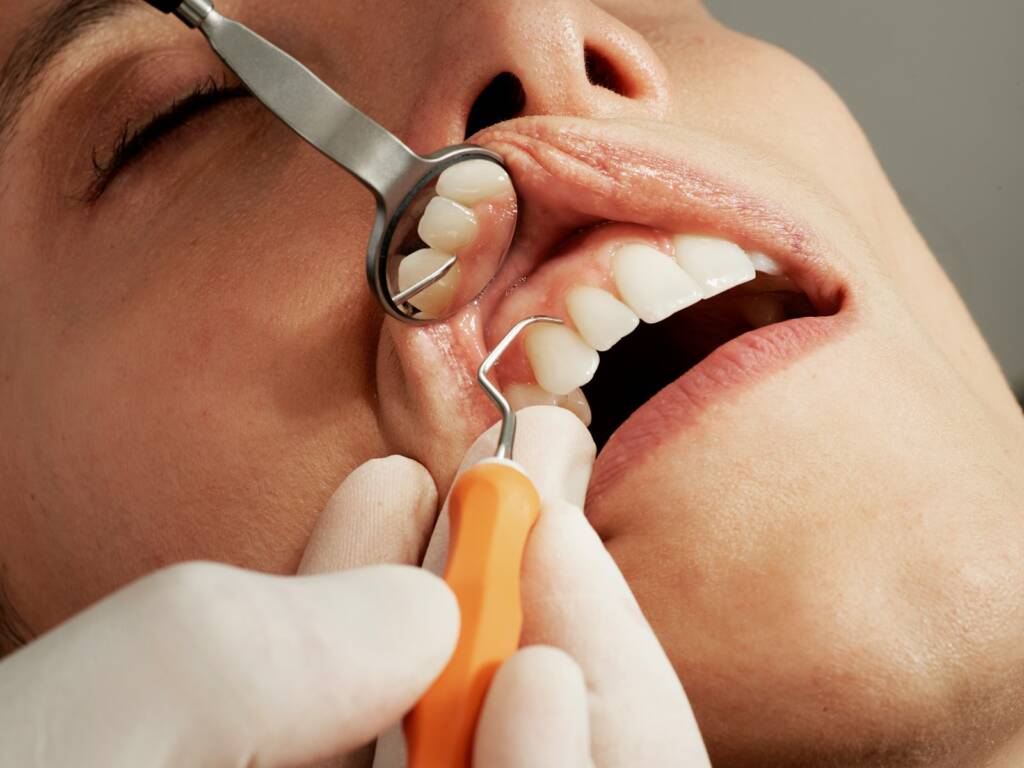
I. Quick Answer: What is the difference between regular teeth cleaning and deep teeth cleaning?
Many patients often confuse the two. Simply put, a regular teeth cleaning is like "sweeping the floor," removing surface dust; a deep cleaning is like "scraping the bottom," removing years of accumulated dirt from under the surface. The dentist will use a periodontal probe to measure the depth of the "pocket" between the gum line and the tooth.
- Healthy/mild gingivitis: periodontal pocket depth < 3mm → regular teeth cleaning.
- Periodontal disease: Periodontal pocket depth > 4-5mm → Deep cleaning.
| Comparison items | Standard teeth scaling | Deep cleaning |
|---|---|---|
| medical name | Supragingival debridement | Subgingival scaling and root planing (SRP) |
| Cleaning range | gum margin and tooth surface | Deep beneath the gum (on the surface of the tooth root) |
| Anesthesia demand | Anesthesia is usually not required. | Local anesthesia is required |
| Number of treatments | Completed in one session (approximately 30 minutes) | Performed in 2-4 sessions (full mouth) |
| Price range (2026) | HK$500 - HK$1,000 | HK$6,800 - HK$14,000+ |
II. 2026 Hong Kong Periodontal Disease Treatment Fee Reference Table
Deep cleaning is typically priced per tooth, per quadrant, or per mouth. Furthermore, the cost also depends on whether the dentist is a general dentist (GP) or a periodontist.
| Treatment Program | Reference price for general practitioners | Specialist Doctor Reference Price |
|---|---|---|
| Deep cleaning/root scaling (full mouth) | HK$6,800 - $14,000 | HK$18,000 - $28,000 |
| Periodontal flap surgery (each quadrant) | Depending on the case | HK$8,000 - $15,000 |
| Periodontal regeneration surgery (bone/flesh replacement) | -- | Starting from HK$10,000 - $20,000 |
| Dental Scaling under Anesthesia (MAC / IV Sedation) | HK$3,500 - $5,500 (surcharge) | Fees depend on the anesthesiologist |
Third, in-depth analysis: why brushing teeth will have periodontal disease?
Many patients ask, “Why do I still have periodontal disease when I brush my teeth every morning and evening?” In fact, periodontal disease is an “invisible killer.”
1. The formation mechanism of dental calculus
Brushing only cleans 60-70% of the tooth surface. The spaces between teeth and the gingival sulcus are areas that are difficult to clean. Minerals in saliva combine with plaque and calcify into hard tartar within 48 hours. Once tartar forms, it cannot be removed by ordinary toothbrushes and dental floss.
2. The vicious cycle from gingivitis to periodontitis
The rough surface of tartar makes it easier for more bacteria and toxins to adhere to it.
- Initial stage: Bacteria irritate the gums, causing redness, swelling, and bleeding when brushing (gingivitis). At this stage, a regular dental cleaning can reverse the symptoms.
- Late stage: If left untreated, bacteria will erode the alveolar bone below the gums, leading to bone atrophy, gum separation, and the formation of deep periodontal pockets. This is why deep cleaning is necessary—the dentist must insert instruments deep into the gums to scrape away the infected material attached to the root surface.
IV. Detailed Explanation of the Deep Teeth Cleaning Process: Does it hurt?
Deep cleaning is a delicate, minimally invasive procedure, and Home Dental, as a qualified day care center, strictly adheres to aseptic procedures.
- Periodontal assessment (Charting): The dentist will measure the depth of periodontal pockets for each tooth, record bleeding points, and draw your "periodontal map".
- Local anesthesia (Pain Control): This is the part patients are most concerned about. Because the treatment involves deep within the gums, we will administer local anesthesia to the treatment area to ensure a painless procedure. For extremely anxious patients, monitored anesthesia care can be chosen, which is performed in a semi-sleep state.
- Root planning: Large pieces of tartar are broken up using ultrasonic waves, and then a hand curette is used to carefully scrape away toxins and diseased tissue from the root surface, making the root smooth and allowing the gums to re-adhere.
- Follow-up care: Depending on the situation, the dentist may inject a long-acting antibiotic gel into the periodontal pocket to help kill bacteria.
V. Let's do the math: Is deep cleaning more expensive, or is dental implant more expensive?
許多人看到 HK$8,000 的深層洗牙費用會卻步,轉而尋求「幾百蚊」的普通洗牙。這是一個極危險的誤區。普通洗牙無法清除牙齦下的結石,反而可能給您一種「已清潔」的假象,導致病情在無形中惡化。
Long-term economic considerations:
- Cut your losses in time: Deep cleaning costs approximately HK$8,000 - $12,000 (full mouth) and can successfully preserve your original teeth.
- Ignoring the consequences: If periodontal disease leads to tooth loss, the cost of a single dental implant can reach HK$20,000 - $30,000. If multiple teeth are missing, the reconstruction cost can easily exceed HK$200,000.
Conclusion: Although deep cleaning is more expensive, it is the most economical way to preserve your precious natural teeth.
VI. Frequently Asked Questions (FAQ): Debunking Myths
Q1: Will the gaps between my teeth become larger after a deep cleaning?
This is a common visual illusion. Before treatment, your teeth gaps are filled with inflamed gums and tartar buildup. Once the tartar is removed and the gum inflammation subsides, the spaces that were previously created due to bone atrophy become visible (known as "black triangles"). This isn't damage caused by the cleaning; it simply reveals the teeth's true condition. Without cleaning, the bone will continue to atrophy, the gaps between your teeth will only widen, eventually leading to tooth loss.
Q2: Does medical insurance cover the cost of deep cleaning?
This depends on your policy terms. Generally, "routine teeth cleaning" is categorized as a wellness service with lower coverage; while "periodontal treatment" is a medical procedure. Most company group medical insurance policies or high-end individual health insurance policies that include dental coverage usually cover this service. We recommend requesting a quote from us before treatment so you can check with your insurance company.
Q3: What should I do if my teeth are extremely sensitive after a teeth cleaning?
After removing the thick tartar covering the tooth root, the dentin is temporarily exposed, and sensitivity to hot and cold is a normal post-operative reaction, usually lasting 1-2 weeks. It is recommended to use desensitizing toothpaste and avoid excessively hot or cold foods. As the gums heal and reattach, the sensitivity will gradually disappear.
VII. Conclusion: Early treatment protects dental health
Periodontal disease is the leading cause of tooth loss in adults and is closely related to systemic diseases such as heart disease and diabetes. Do not delay treatment because you are worried about the cost of deep cleaning.
Unsure about your gum health? Home Dental offers professional oral examinations and periodontal triage services. If you experience bleeding gums while brushing, persistent bad breath, or teeth that seem to be growing longer, please refer to our 2026 Hong Kong Dental Fee Guide or contact us immediately to schedule an appointment for a transparent and appropriate treatment plan.